Prakash Mehra
Special Desk
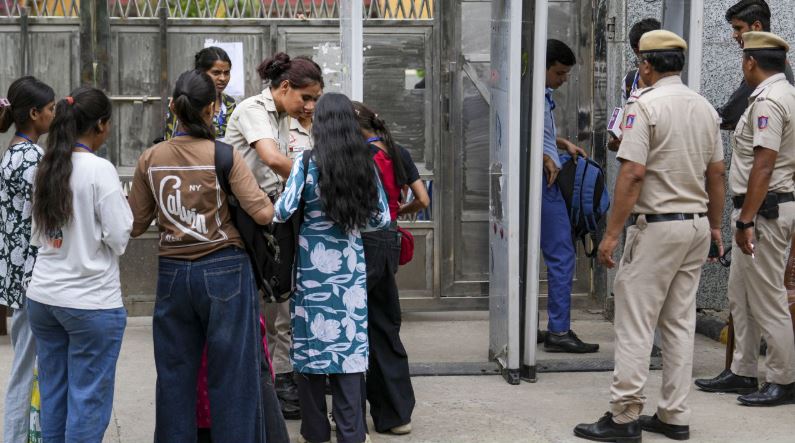
Patna: After the exposure of a solver gang in the NEET-UG examination, the investigation is continuously revealing new findings. A day after the action taken on Sunday, the police investigation has revealed that the gang executed the entire conspiracy by breaching the biometric verification system implemented at examination centers. According to the preliminary investigation, with the alleged connivance of some personnel associated with biometric verification, fake candidates were allowed entry into examination centers in place of the actual candidates.
Medical Student Was Running the Entire Network
According to police sources, the investigation so far has identified Ravishankar, a student of Pawapuri Medical College, Rajgir, as the main operator of the network. He is accused of recruiting students studying in various medical colleges as solvers and planning to have them appear in the examination in place of the actual candidates.

The investigation has also revealed that the gang targeted candidates who were willing to pay any price to secure admission to a medical college. Such candidates were allegedly promised success in the examination in exchange for hefty sums of money.
Manipulation Carried Out Under the Guise of Biometric Staff
Another significant revelation has emerged during the police investigation. Mayank Kashyap, a fourth-year student of Patna Medical College and a resident of Hajipur, allegedly used the identity of Ankit Kumar to work as biometric staff. Police allege that through this means, the gang was able to influence the biometric verification process.
As a result of this manipulation, fake candidates gained entry into examination centers without arousing suspicion and appeared in the examination in place of the genuine candidates. Officials believe that several individuals may have been involved at both the technical and administrative levels in this operation.
30 Arrested, Including Nine Medical Student Solvers
So far, the police have arrested a total of 30 people, including nine solvers. All the arrested solvers are reported to be students of medical colleges. In addition, personnel associated with the biometric agency and other members of the gang have also been taken into custody.
Among those arrested is an original candidate who allegedly attempted to benefit from this illegal arrangement. Police are questioning other suspects as well, and further arrests are expected.
Deal Fixed at ₹10–12 Lakh Per Candidate
Lakhisarai SDPO Shivam Kumar stated that the preliminary investigation indicates that deals ranging from ₹10 lakh to ₹12 lakh were fixed for each candidate. Of this amount, ₹1 lakh to ₹2 lakh was taken in advance, while the remaining amount was to be collected after success in the examination and confirmation of admission to a medical college.
Police suspect that illegal transactions worth lakhs of rupees were carried out through this racket. Accordingly, bank accounts, mobile call detail records (CDRs), and digital payment channels are also being thoroughly investigated.
Process of Registering FIR Begins
Based on an application submitted by Dinesh Kumar Bhagat, In-Charge Principal and City Coordinator of Kendriya Vidyalaya, Lakhisarai, the process of registering an FIR at the local police station has been initiated. Police stated that the scope of the investigation is continuously expanding and that the role of every individual connected to the racket is being examined in depth.
Possibility of More Major Revelations
Investigating officers believe that further questioning of the arrested accused may reveal several new names linked to the gang’s network, its financial sources, and other associates. Police are treating the case as an organized examination mafia network and are attempting to uncover its roots.
This case, involving the manipulation of the biometric verification system in a national-level examination like NEET-UG to facilitate the entry of fake candidates, raises serious questions about examination security arrangements. Investigating agencies are now trying to determine the extent of the network across different states and how many individuals were involved in the operation.