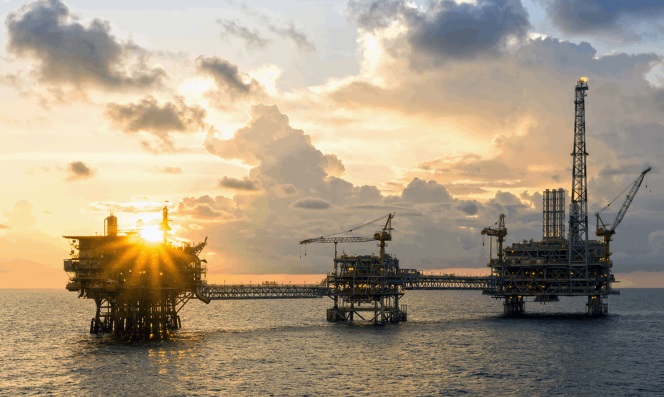
New Delhi : India is quietly preparing for one of its largest offshore oil and gas exploration drives in recent years, with survey ships expected to begin soon scanning vast stretches of the Bay of Bengal in search of untapped hydrocarbon reserves that could reshape the country’s energy future.
Government documents accessed exclusively by CNN-News18 show that the Modi government is planning a massive multi-basin geological survey across India’s eastern offshore region, covering the Bengal-Purnea, Mahanadi, Krishna-Godavari, Cauvery and Andaman offshore basins. Bids for the project were floated on May 14.
The project is technically described as “2D Broadband Marine Seismic & Gravity-Magnetic Data Acquisition, Processing and Interpretation”, but the larger goal is straightforward: identify commercially viable oil and natural gas reserves buried deep beneath the seabed.
A giant underground scan beneath the sea

The scale of the proposed surveys is enormous. According to the government papers reviewed by CNN-News18, the Bengal-Purnea and Mahanadi offshore survey alone will cover nearly 45,000 line kilometres.
The Andaman Basin survey will span another 43,000 line kilometres, while the Krishna-Godavari Basin will also see a 43,000-line-kilometre survey. The Cauvery Basin exploration will add another 30,000 line kilometres.
Taken together, the planned survey lines stretch into lakhs of kilometres and are expected to continue over nearly two years.
The exploration will involve specialised survey vessels towing long cable-like instruments called streamers. These streamers transmit sound waves deep into the seabed and record the echoes reflected back from underground rock formations. Scientists then process this data to create detailed subsurface images several kilometres below the ocean floor.
The objective is to identify geological structures where oil and gas may be trapped beneath layers of sediment and rock formed over millions of years.
Why India’s offshore push matters
The government’s aggressive offshore push comes at a time when India remains heavily dependent on imported energy.
India imports nearly 85 per cent of its crude oil requirement along with a significant share of its natural gas needs. As a result, every geopolitical crisis, crude oil shock or conflict in major energy-producing regions directly impacts India’s fuel prices, inflation and household costs.
Recent global tensions, including the Russia-Ukraine conflict and instability in West Asia, have once again highlighted the vulnerabilities of India’s energy dependence. The ongoing US-Iran tensions have further exposed those risks.
Officials associated with the sector told CNN-News18 that large parts of India’s eastern offshore region remain significantly underexplored compared to western offshore areas such as Mumbai High. Many deepwater zones are considered geologically promising but have not yet been adequately mapped using modern seismic technology.
What the government hopes to find
The government documents state that the surveys are aimed at understanding the “tectonic setup, basement configuration and depositional pattern” of the offshore basins while identifying “structural and stratigraphic hydrocarbon plays and prospects”.
In simpler terms, India wants to determine where the next major hydrocarbon discoveries may lie.
The Bengal Offshore Basin is viewed as particularly promising. According to the documents, it contains sedimentary layers exceeding 10 kilometres in thickness, with hydrocarbon potential stretching from the Eocene period to more recent geological eras. Significant Miocene-age deposits in the east-central region are considered major exploration targets, while gas indications have already been reported in multiple intervals.
The Mahanadi Basin is also attracting serious attention. Officials describe it as a basin with “potential for commercial production”, with hydrocarbon plays ranging from the Pliocene to the Cretaceous period. Deepwater reservoirs and biogenic gas systems are considered key opportunities there.
Why the Andaman Basin is strategically important
Among all the offshore regions, the Andaman Basin is emerging as one of the most strategically significant.
Energy experts have long believed that the Andaman offshore region could hold massive untapped gas reserves because of its geological similarity to gas-producing fields in Myanmar and Indonesia.
As per the News18 report, the paper specifically mentions that the Andaman fore-arc region contains a “significant gas discovery in Miocene” formations analogous to hydrocarbon systems in neighbouring countries.
The documents also refer to gas hydrates — frozen methane deposits trapped beneath the seabed — which are increasingly being viewed globally as a possible future energy source.
Fresh focus on KG and Cauvery basins
The Krishna-Godavari Basin, already among India’s most important offshore gas-producing regions, is also expected to witness renewed exploration activity.
Fresh surveys indicate the possibility of substantial undiscovered reserves in deeper sections of the basin. Officials point to deep-water turbidite plays, slope fan systems and syn-rift clastic formations that geologists believe may contain significant hydrocarbon accumulations.
The Cauvery Basin, meanwhile, remains one of India’s proven petroliferous basins, with producing horizons ranging from fractured basement rocks to Miocene sequences. However, officials believe that substantial undiscovered potential may still exist in Jurassic-age and deep offshore plays.