New Delhi: A fresh debate over proof of Indian citizenship has emerged after the Ministry of External Affairs (MEA) clarified that a passport, despite being issued only to Indian citizens, is not conclusive proof of citizenship.
The clarification, made on the occasion of the 14th Passport Seva Divas, triggered widespread discussion on social media platform X, with many questioning what constitutes the ultimate and indisputable proof of Indian citizenship.
Passport is primarily a travel document
According to the MEA, a passport is primarily a travel document issued by the government to facilitate international travel. This means that possessing a passport alone does not automatically serve as definitive proof of citizenship.
The clarification has raised eyebrows because Indian passports are issued only to Indian citizens. However, the government maintains that the passport’s primary purpose is to establish identity and facilitate travel rather than serve as a final determination of citizenship.

Adding another layer to the discussion, the passport itself states that it remains the property of the Government of India and must be surrendered if directed by the authorities.
Aadhaar and voter ID not citizenship proof
The confusion surrounding proof of citizenship is not new. Courts and government authorities have previously clarified the status of other key identity documents.
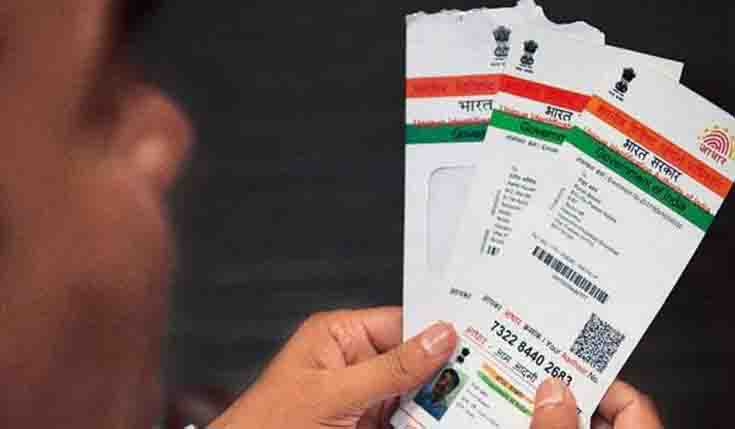
Earlier this year, during hearings related to the Special Intensive Revision (SIR) of electoral rolls, the Supreme Court observed that Aadhaar is not conclusive proof of citizenship. It is primarily an identity document used to establish a person’s identity and residence.
Similarly, a voter ID card is not considered the ultimate proof of citizenship. Its primary purpose is to establish a person’s eligibility to vote and participate in the electoral process.
Who is an Indian citizen under the law?
Indian citizenship is governed by the Citizenship Act and related constitutional provisions.
- Any person born in India between January 26, 1950, and July 1, 1987, is considered an Indian citizen by birth.
- A person born on or after July 1, 1987, is a citizen if at least one parent was an Indian citizen at the time of birth.
- For those born on or after December 3, 2004, citizenship is granted only if both parents are Indian citizens, or one parent is an Indian citizen and the other is not an illegal migrant.
As a result, citizenship is often established through a combination of birth records, parental citizenship documents and other supporting records, rather than through a single universally accepted document.
The MEA also highlighted significant achievements in India’s passport service network, including the successful rollout of chip-enabled e-passports.
According to ministry officials, around 15 million passport-related services were delivered in 2025, including 13.9 million passports.
The government said passport processing times have improved considerably. Excluding the time taken for police verification, passports are now being issued within six working days on average.
Officials also noted that applicants spend less than 45 minutes on average at Passport Seva Kendras. The improvement has been attributed to a major expansion of the passport service network, which has grown from just 77 passport centres a decade ago to 545 centres across the country.
One factual nuance worth noting: legally, India does not have a single document designated as the “final” proof of citizenship. Citizenship is generally established through documentary evidence that satisfies the relevant legal provisions, depending on the individual’s circumstances.