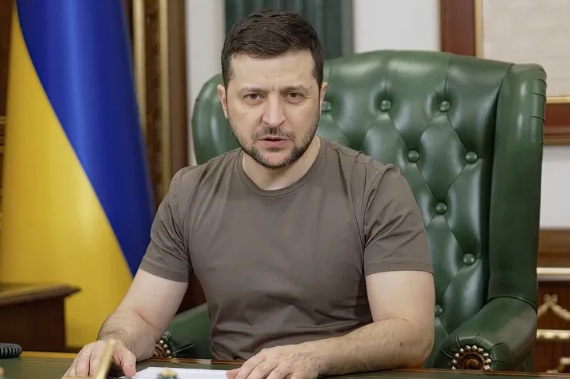
New Delhi: Following Russian President Vladimir Putin’s two-day visit to India, reports indicate that Ukrainian President Volodymyr Zelenskyy could make a trip to New Delhi as early as January 2026, according to the Indian Express. The proposed visit can be seen as part of India’s careful diplomatic balancing act, keeping engagement with both Russia and Ukraine amid the ongoing war. India has followed a calibrated approach in its ties with the two nations.
Last year, Prime Minister Narendra Modi visited Moscow in July to meet Putin, and the following month, he travelled to Ukraine the first-ever visit by an Indian Prime Minister to Ukraine since diplomatic ties were established in 1992.
The report further said that discussions between Indian and Ukrainian officials have been ongoing for several weeks, with New Delhi coordinating closely with Zelenskyy’s office even before Putin’s visit.
Ukrainian envoy Oleksandr Polishchuk had confirmed in August 2025 that both nations are “trying to agree on a precise date” and that Zelenskyy’s visit is expected to materialize.

India’s stance on the conflict
India has maintained a stance calling for peace, dialogue, and respect for sovereignty, avoiding taking sides. During Putin’s visit, PM Modi reiterated that India is “not neutral” but firmly stands for peace.
External Affairs Minister S Jaishankar also said that diplomacy is the only way forward. Following PM Modi’s visit to Ukraine in August last year, a joint statement shed light on both nations’ intent to elevate bilateral relations from a comprehensive partnership to a strategic one in the future.
PM Modi and Zelenskyy have maintained regular contact, including a bilateral meeting in New York in September 2024 and multiple phone calls, with both leaders carefully avoiding terms like “war” or “conflict,” instead referring to the situation in Ukraine as a “crisis.”
It is pertinent to note that Ukraine has sent its Presidents to India only three times previously, in 1992, 2002, and 2012 making a Zelenskyy visit a notable event in diplomatic history.