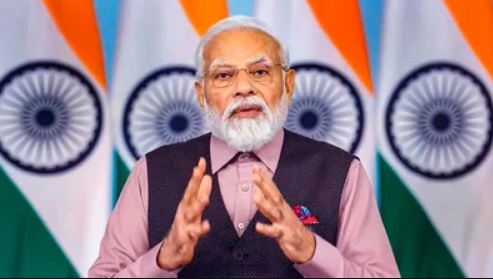
New Delhi : Prime Minister Narendra Modi’s recent appeal urging citizens and institutions to conserve fuel, adopt work-from-home practices where possible, reduce unnecessary foreign travel and avoid non-essential foreign exchange outflows has triggered widespread media coverage describing the measures as “austerity.” However, government sources and economic indicators suggest that characterisation may be misleading.
The Prime Minister’s remarks came amid escalating geopolitical tensions in West Asia, rising crude oil prices, and pressure on India’s foreign exchange reserves and currency markets. India, the world’s third-largest oil importer, has been grappling with the economic ripple effects of the Iran conflict and disruptions linked to the Strait of Hormuz.
In public addresses over the past week, Modi urged citizens to reduce petrol and diesel consumption, increase the use of public transport and electric mobility, embrace carpooling, and encourage virtual meetings and work-from-home arrangements. He also appealed for restraint in discretionary imports such as gold purchases and avoidable foreign travel.
Why the “Austerity” Label Is Being Challenged
Austerity usually suggests budget cuts, reduced government spending, lower subsidies, and fiscal tightening. The Modi government is not cutting capital expenditure, welfare spending, or subsidies.

PM Modi’s appeal is not about spending less. It is about spending more wisely by reducing fuel consumption, avoidable dependence on imported goods and foreign-currency-intensive services.
Conventional austerity policies are typically associated with:
- cuts in government spending,
- reduction in welfare expenditure,
- subsidy withdrawals,
- lower public investment,
- fiscal tightening aimed at deficit reduction.
So far, the Modi government has not announced cuts in capital expenditure, infrastructure spending, welfare allocations, or social-sector programmes.
Instead, officials describe the current approach as a resource-optimisation and economic resilience strategy designed to:
- reduce fuel dependence,
- conserve foreign exchange reserves,
- shield the economy from imported inflation,
- lower pressure on the rupee.
The Centre has repeatedly stressed that there is “no fuel crisis” and that the appeal is precautionary rather than panic-driven.
The backdrop to the government’s messaging is a sharp surge in global crude prices and sustained pressure on the Indian rupee. Rupee slipped to a record low against the US dollar this week, with economists attributing the decline partly to soaring oil prices and importer demand for dollars.
Symbolic Government Action Underway
To reinforce the message, the Prime Minister has reportedly reduced the size of his official convoy and encouraged wider adoption of fuel-saving practices across government departments.
Several BJP-ruled states have also begun implementing advisory measures:
- Uttar Pradesh has encouraged limited work-from-home arrangements,
- Delhi ministers have been asked to prioritise public transport,
- Maharashtra has shifted more meetings online.
Senior Union ministers including Amit Shah and Rajnath Singh have reportedly downsized convoy movements and reduced non-essential travel.
Industry groups and market observers have largely interpreted the appeal as a temporary conservation drive linked to global uncertainty rather than a structural economic slowdown.
While some business leaders backed the call as “responsible economic signalling,” sections of the jewellery trade expressed concern over the appeal to postpone gold purchases, warning of possible demand disruptions.