NEW DELHI : Counterfeiters in India are no longer limiting themselves to popular medicines and lifestyle drugs. They are now targeting life-saving vaccines, highlighting the growing sophistication and reach of the illicit pharmaceutical trade.
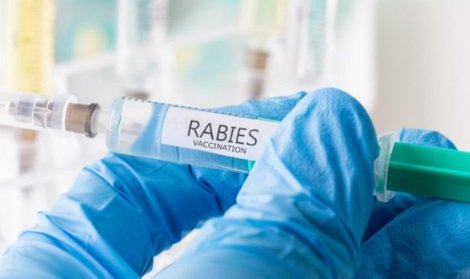
The latest example is Abhayrab, one of India’s most widely used rabies vaccines manufactured by Indian Immunologicals Ltd (IIL), a subsidiary of the National Dairy Development Board (NDDB), which holds about 40 percent of the domestic rabies vaccine market. A batch of Abhayrab sampled by the Central Drugs Standard Control Organisation (CDSCO) from an unlicensed residential premises in Delhi was found to be “not of standard quality” and misbranded.
The company has said the product didn’t originate from its manufacturing facility.
Company denies link to seized batch

In a statement, IIL said the vaccine vials carrying batch number KE25012, seized from Delhi’s Mukherjee Nagar, were materially different from the original product.
The Central Drugs Laboratory found 17 differences between the seized vials and its retained samples from the same batch. It added that the original batch had been tested and released by the Central Drugs Laboratory in November and that over 83,000 vials were supplied only through authorised distribution channels.
The company has asked authorities to trace the source of the suspect vials and initiate action against those responsible. It also said no market complaint had been received regarding the genuine batch.
Reports say four people have been arrested in connection in the case, which underscores a worrying shift in the counterfeit drug trade, with criminals increasingly targeting critical healthcare products.
‘Not even sparing vaccines’
“Leading brands are often the targets but the counterfeiters are not even sparing vaccines and anti-cancer medicines,” Indian Pharmaceutical Alliance (IPA) secretary general Sudarshan Jain told Moneycontrol. IPA represents all large homegrown pharmaceutical companies.
Jain said counterfeit medicines have become a major challenge for the industry as well as the public health system.
“It’s an inter-state organised crime. It’s a criminal offence,” he said, calling for stronger provisions in the proposed Drugs and Cosmetics law, including fast-track courts to deal with counterfeit medicine cases.
Counterfeit medicines are often pushed into the market by offering steep discounts, ranging from 60 to 80 percent, to retailers and distributors, he said. Delhi, Uttar Pradesh, Bihar,
Uttarakhand, Rajasthan and Punjab account for a significant share of reported incidents, he added.
Criminals get sophisticated, make detection difficult
Industry executives warn that counterfeiters have become increasingly difficult to detect.
“The counterfeits have achieved a level of sophistication. They even copy QR codes, steal holograms and procure similar packaging materials and ink from suppliers who supply original brands,” Jain said.
A senior pharmaceutical executive, who did not wish to be named, said legitimate manufacturers often face reputational damage when counterfeit products are linked to their brands.
“Sometimes state drug controllers publish brand names along with manufacturers’ names citing substandard or spurious drugs. When we investigate, we find that the tested sample does not belong to our manufacturing batches. By the time the issue is corrected, the damage is already done,” the executive said.
The Abhayrab case illustrates the dilemma.
Counterfeit drug problem is growing
According to the ASPA-Crisil Intelligence report, State of Counterfeiting in India 2025, consumers estimate that nearly 28 percent of pharmaceutical products in the market may be counterfeit, up from 20 percent in 2022.
The report also found that 80 percent of consumers believe pharmaceutical counterfeiting has increased over the past 12 months.
Authentication Solution Providers’ Association (ASPA) is a self-regulated industry body that promotes anti-counterfeiting, product authentication and traceability solutions.
The report recorded 521 pharmaceutical counterfeiting incidents between 2018 and 2025. It noted that during and after the Covid-19 pandemic, products such as vaccines, medicines, PPE kits and masks became major targets for counterfeiters.
ASPA president Ankit Gupta said counterfeiters are becoming “more sophisticated and better funded”, while the growth of e-commerce and increasingly complex supply chains have made the problem more difficult to combat.