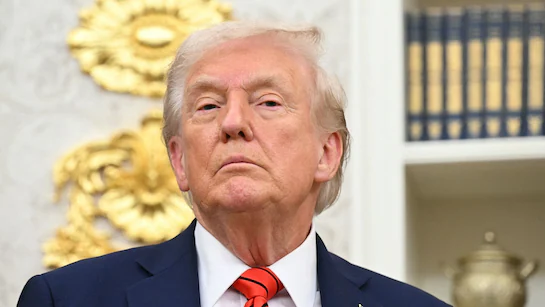
U.S. President Donald Trump has said that tensions between India and Pakistan in May were halted only after he threatened trade deals and tariffs — a version of events New Delhi firmly rejects.
In a speech at the America Business Forum in Miami, Trump recounted how “seven planes were shot down, the eighth badly wounded” during the four-day clash triggered by India’s Operation Sindoor beginning May 7, 2025. He said he told both India and Pakistan: “I’m not going to make any trade deals with you … if you’re at war with each other.” According to him, the next day he received a call saying “We made peace”. He added: “Tariffs did that… Without tariffs, that would never have happened.”
On the U.S. legal-front, his administration used this account while defending tariffs imposed under the International Emergency Economic Powers Act (IEEPA). U.S. Commerce Secretary Howard Lutnick told the U.S. Court of International Trade that the cease-fire between two nuclear powers was “only achieved after President Trump interceded and offered both countries trading access with the United States.” According to the filing, any curtailment of presidential tariff powers could “lead India and Pakistan to question the validity” of that offer, putting regional security at risk.
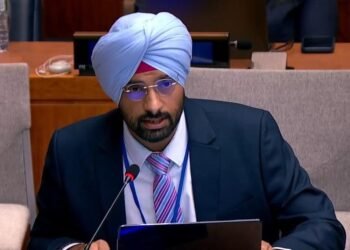
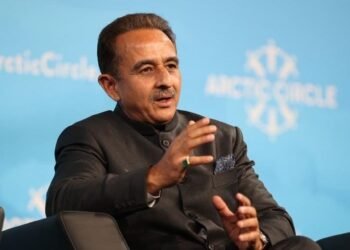
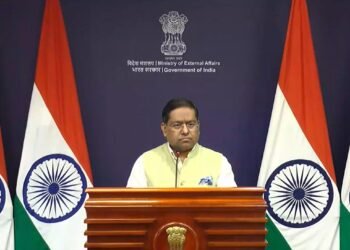
However, the Indian government has repeatedly rejected this narrative. A spokesperson for the Ministry of External Affairs said “the issue of trade or tariffs did not come up” in talks during that period. New Delhi says the cease-fire was reached through direct military-to-military contacts between the two countries — the DGMOs (Directors General of Military Operations) — and not through U.S. mediation.

The dispute centres both on facts and attribution:
-
India and Pakistan did indeed reach an “understanding” on May 10, 2025, to halt major cross-border drone and missile strikes after India’s Operation Sindoor, launched in retaliation for the April 22 Pahalgam terror attack that killed 26 civilians.
-
Trump claims credit by linking it to trade leverage; India denies any such linkage, emphasising bilateral resolution without third-party involvement.
-
The U.S. administration’s legal filings use the India-Pakistan example to bolster executive trade power arguments, while India deems the tariff-mediation claim “baseless”.
In parallel, Trump’s rhetoric has led to further trade tensions: the U.S. has maintained punitive tariffs on certain Indian goods—citing India’s continued Russian oil imports—and simultaneously lowered tariffs for Pakistan, deepening New Delhi’s concern about U.S. favouritism. India appears to be gravitating toward stronger ties with Russia and China in response.
Why it matters
-
It highlights how trade instruments (tariffs, deals) are being framed as tools of diplomacy and conflict management, not merely economic policy.
-
It underscores the growing role of the U.S. executive branch in using trade policy for foreign-policy leverage, with implications for how other nations view U.S. reliability.
-
For India and Pakistan — both nuclear-armed — the claim of U.S. mediation via tariffs touches on sovereignty, strategic autonomy, and the narrative of how the cease-fire was achieved.
-
It may influence future U.S.–India trade negotiations, since India views the repeated tariff-warnings-as-diplomacy narrative as undermining.
What to watch
-
Whether the U.S. Court of International Trade will rule on the IEEPA challenge, and how that may affect the executive’s trade/foreign-policy powers.
-
How India responds diplomatically: will New Delhi publicly push back again, or quietly adjust its trade/strategic posture toward the U.S.?
-
Whether further U.S. tariff actions or trade negotiation outcomes reflect this “tariff-as-diplomacy” approach.
-
The longer-term impact on India-U.S. relations and India-Pakistan dynamics: if India feels U.S. leverage is being used against it, it may pivot strategically.