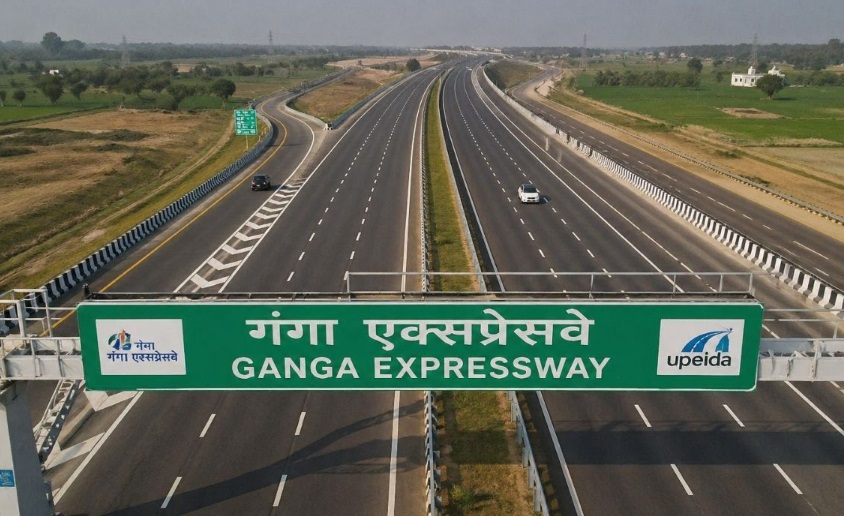
New Delhi : The Ganga Expressway is fast emerging as a key political instrument for the BJP in Uttar Pradesh, with the ruling party positioning the mega project as proof of governance and delivery ahead of the 2027 assembly elections.
Prime Minister Narendra Modi inaugurated the 594-km expressway connecting Meerut to Prayagraj, a move seen as part of a calibrated strategy to translate infrastructure into electoral gains. The project links western and eastern Uttar Pradesh, regions that differ sharply in social and political behaviour, making the corridor electorally significant.
Along its route, the expressway passes through 12 districts including Meerut, Hapur, Bulandshahr, Amroha, Sambhal, Badaun, Shahjahanpur, Hardoi, Unnao, Rae Bareli, Pratapgarh and Prayagraj. Officials said the improved connectivity is expected to boost trade, mobility and regional development across the state while directly impacting over 60 assembly constituencies.
The project is also being positioned as an economic engine. The expressway is expected to evolve into a large scale manufacturing and logistics corridor, with investment proposals worth ₹46,660 crore already lined up. This is likely to strengthen the government’s narrative around job creation, industrial growth and rural-urban integration.

Chief Minister Yogi Adityanath has consistently framed infrastructure as the backbone of a “new Uttar Pradesh,” and the Ganga Expressway is being showcased as the flagship of that model. The corridor complements existing projects like the Purvanchal and Bundelkhand expressways, reinforcing a development-driven political pitch.
The Ganga Expressway passes through 12 districts that are largely seen as BJP strongholds, collectively accounting for 69 assembly constituencies. In the 2022 Uttar Pradesh assembly elections, the BJP and its allies won 50 of these seats, underlining the political weight of the corridor.
The party, however, faced setbacks in parts of Rohilkhand, particularly in Sambhal and Budaun, which are considered strongholds of the Samajwadi Party. In Meerut, the BJP managed to win only three of the seven seats, with the rest going to the SP. In contrast, the BJP and its allies swept all seven seats in Bulandshahr, leaving the opposition without representation.
In Sambhal, the SP dominated by winning three of the four seats. Amroha saw a split verdict, with BJP allies and SP allies winning two seats each. Hapur remained firmly with the BJP, which won all three constituencies.
Further along the corridor, the BJP swept all six seats in Shahjahanpur, while in Budaun the contest was evenly split, with the BJP alliance and SP alliance winning three seats each. Hardoi and Unnao were strongholds for the BJP, where it won all eight and six seats respectively.
In Rae Bareli, the BJP secured four out of six seats. In Prayagraj, it won eight of the 12 constituencies, maintaining a clear edge. However, in Pratapgarh, the BJP could win only two seats, indicating pockets of resistance within the larger belt.
Political analysts see a clear link between infrastructure push and electoral messaging. “People in these regions have effectively been rewarded for their loyalty to the BJP, and with development reaching their doorstep, that loyalty is only likely to deepen,” said R N Bajpayee.
Echoing a similar view, Rajendra Kumar, a senior journalist, said large infrastructure projects often follow political geography. “Political leadership tends to drive development through its strongholds. Akhilesh Yadav’s Agra Lucknow Expressway passed through his core belt of Kannauj, Farrukhabad and Etawah. Expressways are increasingly becoming a way of saying thank you to voters, where development and politics go hand in hand,” he said.
The BJP is also weaving cultural and strategic messaging around the project. Running parallel to the Ganga and linking key religious centres, the expressway fits into a broader push to promote faith-based tourism. At the same time, the presence of an emergency airstrip along the route adds a national security dimension, further strengthening the government’s narrative.
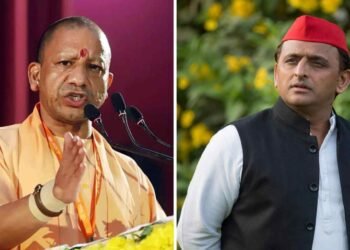
For the opposition, including the Samajwadi Party led by Akhilesh Yadav, countering this development narrative remains a challenge. The expressway, beyond its economic utility, is now central to the political messaging battle in Uttar Pradesh.
As the project nears completion, it is set to bolster the BJP’s claim of delivery on the ground, giving fresh momentum to Yogi Adityanath’s development plank in the run-up to the next electoral cycle.