New Delhi : For most of the last decade, watching the summer box office felt like reading the same book over and over. Another Marvel entry. Another Star Wars spin-off. Another sequel nobody asked for. Audiences kept showing up, studios kept counting the money, and original stories kept getting squeezed out. Then 2025 happened, and something shifted for Hollywood sequels.
How franchises took over everything
The numbers tell a stark story. Back in 2019, the last full pre-pandemic year, franchise films pulled in 82.5% of Hollywood’s worldwide box office revenue. Original, non-franchise films shared just 17.5% of the pie, even though they made up the majority of releases. Studios had figured out a formula: familiar characters, built-in audiences, lower marketing costs because you didn’t need to explain what the movie was.
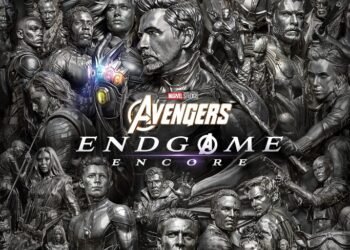
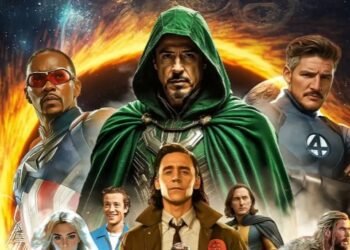
The Marvel Cinematic Universe led the charge. Its 37-film run became the highest-grossing franchise in history, amassing over $32 billion globally. ‘Star Wars’ followed. Disney doubled down on remakes. Sequels multiplied. By 2024, every film in the domestic top ten, except ‘Wicked’, was a sequel, remake, or franchise installment.
The logic was hard to argue with. Successful franchise films averaged 3.1x return on their production investment compared to 1.8x of originals. A $150 million sequel was a safer bet than a $100 million original. Studios preferred reliable returns over risky excellence.

Somewhere between the fourth ‘Jurassic World’ film and the third ‘Ant-Man’ movie, audiences started losing patience.
A Hub Entertainment Research survey found that only 29% of American consumers said they keep up with most or all entries in a given franchise. More telling: 62% said they preferred original stories over another sequel or spin-off. Only 24% of respondents described themselves as eagerly anticipating the next Marvel release, a staggering fall for a brand that once felt unstoppable.
The box office reflected the mood. ‘Captain America: Brave New World’ opened to a critics’ score of 48% on Rotten Tomatoes. That same metric for ‘The Avengers’ back in 2012 was 91%. ‘The Fast and the Furious’ series stalled after Fast X underperformed. ‘Wicked: For Good’ earned under $350 million domestically, a sharp drop from the original’s $475 million run. Disney’s ‘Snow White’ remake lost more than $200 million. ‘Tron: Ares’ managed just $142 million worldwide.
The pattern was consistent across Rotten Tomatoes data going back 40 years: original films average 68% critical approval. First sequels average 58%. By the third or fourth entry, scores drop into the 40s. Both critics and audiences rated them lower. Box office returns followed the same downward slope.
Then ‘Sinners’ changed the conversation
In April 2025, Ryan Coogler released Sinners. It was a wholly original horror film. No sequel, no prior IP, no guaranteed fanbase. Set in 1932 Mississippi, it starred Michael B Jordan in dual roles as twin brothers who open a juke joint and encounter a supernatural threat. Warner Bros. greenlit it on the strength of Coogler’s name and Jordan’s star power alone.
It opened to $48 million domestically in its first weekend, the best opening for an original film since Jordan Peele’s Us in 2019. It crossed $200 million domestically in its fourth weekend, becoming the first original film to do so since Coco in 2017. It earned a 97% critics’ score on Rotten Tomatoes and a CinemaScore of “A”, the highest grade ever given to a horror film in 35 years. At the 98th Academy Awards, it received 16 nominations and won four, including Best Actor for Jordan and Best Original Screenplay for Coogler.
The film drew a wide, diverse audience. Exit polling showed 64% of attendees were 35 or younger. Coogler wrote an open letter to supporters, telling them: “Together maybe we can expand the definition of what a blockbuster is, what a horror movie is, and of what an IMAX audience looks like.”
‘Project Hail Mary’ took it further
If ‘Sinners’ was the proof of concept, ‘Project Hail Mary’ released in March 2026 was the confirmation.
Directed by Phil Lord and Christopher Miller and starring Ryan Gosling, the film is based on Andy Weir’s novel of the same name. It follows a science teacher who wakes up alone on an interstellar spacecraft with no memory of how he got there. It had no franchise label. No sequel. No cinematic universe attached to it. Amazon MGM spent over $200 million making it and took a significant creative gamble.
The gamble paid off. It opened to $80.5 million in its first domestic weekend, the second-largest opening for a non-franchise film in a decade, behind only Christopher Nolan’s ‘Oppenheimer’. It dropped just 32% in its second weekend, a sign of exceptionally strong word of mouth. As of mid-May 2026, it has grossed $332 million domestically and $660 million worldwide, surpassing ‘The Martian’ as the biggest Andy Weir film adaptation ever made.
It earned a 95% critics’ score and a 96% audience score on Rotten Tomatoes, along with an “A” CinemaScore. It was number one in over 60 international markets, including China, the UK, France, Germany, Brazil, and Japan.
Amazon MGM’s Michael De Luca, one of the executives behind both ‘Sinners’ and ‘Project Hail Mary’, put it plainly: “It’s inspiring to see such a big swing be rewarded with this level of theatrical love, and it adds to the proof that global audiences will absolutely turn out for new films from incredible storytellers.”
So why don’t studios just make more originals?
The economics still tilt against them. Even with these breakout successes, franchise and IP-based films generated 73% of total domestic box office revenue in 2025. Eight of the year’s top ten highest-grossing films were sequels, remakes, or franchise installments.
The financial risk of originals is real. A sequel rarely bombs completely. An original can fail without warning, with no pre-built audience to cushion the fall. Studios pay 30-50% less to market sequels because the audience already knows what the product is. That gap matters when marketing budgets can reach $150-$250 million for a major release.
What ‘Sinners’ and ‘Project Hail Mary’ both had was a combination that is hard to replicate at scale: a visionary director with a clear point of view, a star with genuine box office pull, a story with emotional specificity, and studio executives willing to trust the filmmakers. Those conditions don’t line up every year.
Now what?
The 2026 slate is heavy with franchise titles. More Marvel, a Star Wars revival with The Mandalorian & Grogu in May, and a Zootopia sequel at Thanksgiving. The blockbuster machine hasn’t stopped. It has just been reminded that it has competition.
The next year or two will test whether the recent wave of original successes actually changes studio behaviour. The argument for originality is now easier to make in a pitch room. The numbers are there. The audience appetite is confirmed. But the business model still favours the sequel, and that is not changing overnight.
What has changed is the conversation. Audiences have demonstrated they will show up for fresh stories, as long as those stories are told well. That used to be something studios said they believed. Now there is data to prove it.