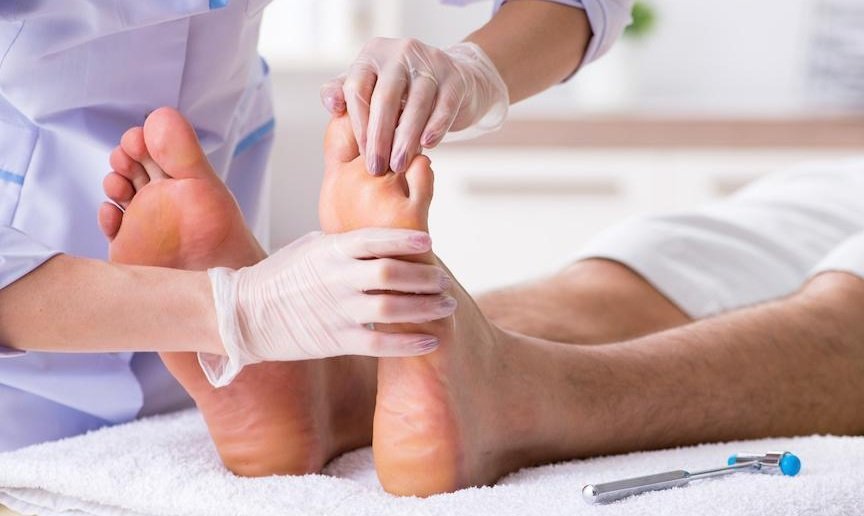
New Delhi: The monsoon may bring welcome relief from the heat, but for people living with diabetes, wet footwear and unnoticed foot injuries can create a dangerous combination. Persistent moisture can soften and damage the skin, while damp socks, friction and minor cuts may create opportunities for infection. At the same time, diabetic neuropathy can reduce sensation, meaning a blister or wound may go unnoticed, while impaired blood flow and persistently elevated blood glucose can make healing more difficult.
Talking to News9 Live, Dr Pradeep Mahajan, Regenerative Medicine Expert and Founder, StemRx Hospital & Research Centre, explains why monsoon-related foot problems can become serious for people with diabetes, and what modern wound-healing approaches may offer. “A small cut or blister can become a serious problem when neuropathy prevents a person from feeling it and diabetes compromises the healing response,” says Dr Mahajan.
Why the monsoon deserves extra caution
Rain itself does not cause diabetic foot ulcers, but monsoon conditions can add practical risks. Wet shoes and socks increase skin maceration and friction, while walking through muddy or contaminated water can expose damaged skin to microorganisms. Fungal infections between the toes can also become a concern.
For someone with diabetic neuropathy, the absence of pain should not be mistaken for the absence of injury. The CDC recommends checking the feet every day for cuts, blisters, redness, swelling, sores and other changes, because early detection can prevent minor problems from becoming severe.

Standard wound care remains the foundation
Despite growing interest in regenerative medicine, established diabetic-foot care remains the first line of treatment. Depending on the wound, this can include debridement, appropriate dressings, infection management, pressure offloading and assessment of blood supply. Blood-glucose management and adequate nutrition are also important components of overall healing.
Gangrene, suspected deep infection, signs of sepsis or an ulcer associated with poor blood supply require urgent medical assessment. “Regenerative medicine should be viewed as a potential adjunct to comprehensive wound care, not as a replacement for infection control, debridement, offloading or vascular assessment,” Dr Mahajan says.
What regenerative medicine may offer
Research into mesenchymal stromal/stem cells (MSCs), extracellular vesicles and tissue-engineering approaches is expanding. MSCs may influence wound healing through paracrine signalling, including modulation of inflammation and promotion of angiogenesis and tissue repair. Recent clinical meta-analyses suggest that MSC-based therapy can improve some wound-healing outcomes, but evidence quality varies and larger, standardised trials are still needed.
Exosomes and other extracellular vesicles are particularly promising in laboratory and preclinical research because they can carry biological signals involved in inflammation, blood-vessel formation, cell migration and tissue repair. However, an important 2026 umbrella review found that evidence for extracellular-vesicle wound therapies remains predominantly preclinical, with no randomised human trials identified in the reviews it assessed.
ECM-based scaffolds are also being investigated as tissue-engineering platforms that can provide structural support for wound repair.
StemRx Hospital & Research Centre says its regenerative approach may incorporate biologic therapies, cellular approaches, ECM-based strategies and supportive modalities, alongside conventional wound management. The hospital’s website identifies Dr Mahajan as its founder and lists regenerative medicine among its clinical focus areas.
Some modalities mentioned by the centre, including microdose infusion and electrical/nano-stimulation approaches, remain less established in mainstream diabetic-foot guidelines and should therefore be considered investigational or adjunctive rather than proven substitutes for standard care. NICE, for example, does not recommend electrical stimulation, growth factors or regenerative wound matrices for diabetic foot ulcers outside clinical trials.
“The objective is not simply to close a wound, but to create the conditions in which tissue can repair, mobility can be preserved and the risk of complications can be reduced,” Dr Mahajan says.
Prevention starts at home
During the rainy season, people with diabetes should keep feet clean and thoroughly dry, change wet socks promptly, wear properly fitting protective footwear, avoid walking barefoot or through potentially contaminated floodwater, and inspect both feet every day. Any new wound, redness, swelling, discharge, colour change or worsening pain, or a wound that is not healing, should prompt medical evaluation.
For diabetic foot problems, early action remains more important than any single advanced therapy. Regenerative medicine may eventually expand the treatment toolkit, but its most responsible role today is alongside and not instead of the fundamentals of diabetic-foot care.