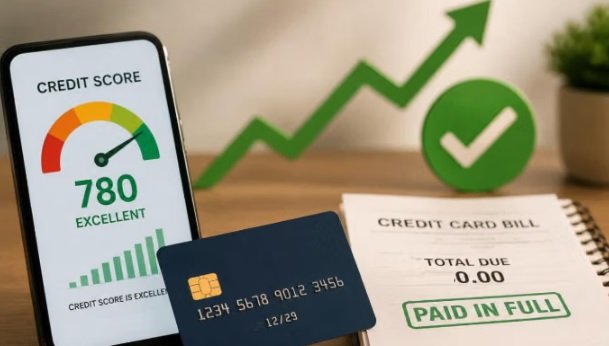
NEW DELHI : Most people treat their credit card as a convenience: a way to skip the ATM queue, earn a few reward points, or tide over the days before payday. Few stop to think of it as what it actually is: a running, very public audition for every loan you’ll ever want. Banks, NBFCs and even some landlords are quietly watching how you use that little rectangle of plastic, and the score they arrive at can decide whether your next home loan comes through in a week or gets stuck in limbo for months.
The good news is that building a strong credit score isn’t about clever tricks or financial wizardry. It’s mostly about consistency, and understanding what the algorithm is actually rewarding.
What your score is really measuring
In India, credit scores are compiled by bureaus such as CIBIL, Experian, Equifax and CRIF High Mark, typically ranging from 300 to 900. Anything upwards of 750 is generally considered strong enough to unlock better interest rates and faster approvals.
The score isn’t a mysterious black box, though it can feel like one. It’s built from a handful of factors: how reliably you’ve repaid past debts, how much of your available credit you’re using at any given time, how long you’ve had credit accounts open, the mix of credit types you hold, and how often you’ve gone shopping for new credit recently. A credit card, used properly, touches almost every one of these factors, which is exactly why it’s such a powerful tool when handled well, and such a quiet liability when it isn’t.

Pay in full, not just on time
The single most common misconception is that paying the minimum amount due keeps your score safe. It doesn’t, not in the way people assume. Paying only the minimum avoids a default being reported, but it leaves the rest of the balance accruing interest, often at rates north of 30-40 per cent annually, while doing nothing to improve how lenders perceive your credit behaviour.
The habit worth building is paying the full statement balance, every cycle, before the due date. This does two things at once: it keeps your repayment history spotless, the single heaviest factor in most scoring models, and it stops interest charges from quietly eating into money that could otherwise go towards savings or investments.
The 30% rule nobody explains properly
Credit utilisation, how much of your total credit limit you’re actually using, is the second big lever, and it trips up even people who pay on time religiously.
The commonly cited guideline is to stay under 30 per cent of your available limit at any point. So a card with a Rs 1 lakh limit ideally shouldn’t carry a running balance above roughly Rs 30,000. This isn’t a hard rule etched into law, but bureaus tend to read high utilisation, even if it’s paid off in full every month, as a signal of dependency on credit, which can quietly drag a score down even in the absence of any missed payment.
There’s a simple, slightly counterintuitive fix here: asking for a credit limit increase, even without any intention of spending more, can improve your utilisation ratio simply by expanding the denominator. A Rs 30,000 balance looks very different against a Rs 1 lakh limit than it does against a Rs 2 lakh one.
Old cards are quietly doing you a favour
There’s a temptation, especially for people cleaning up their wallets, to close old credit cards they no longer use. This is usually a mistake from a credit-score perspective.
Length of credit history matters, and an old card, even one gathering dust, is evidence of a long-standing, well-managed credit relationship. Closing it shortens your average account age and can also reduce your overall available credit, pushing up your utilisation ratio on paper even if your spending hasn’t changed at all. Unless a card carries a steep annual fee that’s no longer worth paying, it’s often better left open and used for the odd small purchase every few months, just to keep it active.
Applying for five cards in a month won’t impress anyone
Every credit card or loan application triggers what’s called a hard inquiry, and each one dings your score slightly. It’s a small dent individually, but a flurry of them in a short window reads to lenders as financial stress, as though you’re suddenly scrambling for credit from multiple directions at once.
This is one area where patience genuinely pays. Space out applications, and only apply for a new card when there’s a real reason to, better rewards, a genuine need, or an upgrade that makes sense for your spending pattern, rather than chasing every sign-up bonus that lands in your inbox.
A mix of credit helps, but don’t force it
Lenders like to see that you can handle different kinds of credit responsibly, a mix of, say, a credit card and an EMI-based loan, rather than relying on just one type. This doesn’t mean taking out a personal loan purely to diversify your credit profile; that’s usually a false economy once interest costs are factored in. But it does mean a credit card used sensibly alongside, say, an existing car loan or education loan can round out a credit profile in a way that a card alone might not.
None of this requires spreadsheets or financial jargon. A credit card, used with basic discipline, full payments, modest utilisation, patience with new applications, and a reluctance to close old accounts, quietly does most of the score-building work on its own.