Touch with World
Tuesday, October 20, 2026
  • Home
  • India
    • Uttar Pradesh
    • Haryana
    • Uttarakhand
    • Punjab
    • Rajsthan
    • Bihar
    • North India
    • South India
  • NCR
    • Delhi
    • Noida
    • Gaziabad
    • Gurugram
    • Faridabad
  • World
  • Politics
  • Economy
    • Business
    • Markets
    • Cryptocurrency
    • Startup
    • Real Estate
  • Crime
  • Opinion
    • Interview
  • Religion
    • Spirituality
    • Dharma
    • Astrology
    • horoscope
  • Education
    • campus
  • Health
    • Yoga
    • Aayurveda
    • Fitness
  • Sports
  • Page3
    • Bollywood
    • Hollywood
    • Fashion
  • E Paper
Touch with World
  • Home
  • India
    • Uttar Pradesh
    • Haryana
    • Uttarakhand
    • Punjab
    • Rajsthan
    • Bihar
    • North India
    • South India
  • NCR
    • Delhi
    • Noida
    • Gaziabad
    • Gurugram
    • Faridabad
  • World
  • Politics
  • Economy
    • Business
    • Markets
    • Cryptocurrency
    • Startup
    • Real Estate
  • Crime
  • Opinion
    • Interview
  • Religion
    • Spirituality
    • Dharma
    • Astrology
    • horoscope
  • Education
    • campus
  • Health
    • Yoga
    • Aayurveda
    • Fitness
  • Sports
  • Page3
    • Bollywood
    • Hollywood
    • Fashion
  • E Paper
No Result
View All Result
Touch with World
Home Religion

How to place idols in your home temple: Vastu tips and Hindu rules you should know

by Touch With World
July 5, 2026
in Religion, Spirituality
333
0
home temple
112
SHARES
1.6k
VIEWS
Share on WhatsappShare on FacebookShare on X

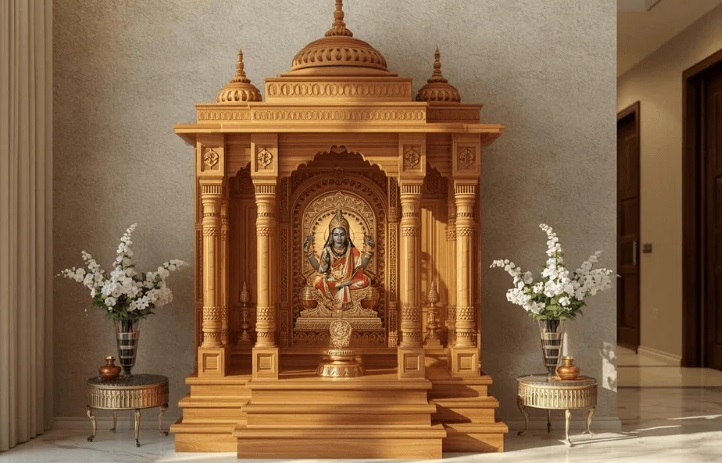
New Delhi: A home temple is more than a dedicated prayer space. It is a place where families gather to offer prayers, seek peace, and strengthen their spiritual connection. While devotion is the most important part of worship, many people also follow traditional guidelines for arranging idols and pictures of deities in the home temple.

According to Hindu traditions and Vastu principles, placing idols thoughtfully helps create an organised and peaceful prayer space. While customs may differ across regions and families, the following guidelines are widely observed.

Choose the right location for the home temple
Traditionally, the northeast (Ishan) corner of the house is considered the most auspicious place for a home temple. If this is not possible, the east or north direction is also commonly preferred.

When offering prayers, many devotees prefer facing east or north, as these directions are traditionally associated with positivity and spiritual practices.

Keep the temple in a quiet, clean, and well-ventilated area. Avoid placing it near bathrooms, directly beneath staircases, or in spaces used for storage.

Keep the temple simple and neat
A home temple does not need to be elaborate. A clean wooden mandir or a dedicated shelf is sufficient for daily worship.

Many traditional households prefer wooden temples made from teak or similar natural wood. Whatever the material, the focus should remain on cleanliness, simplicity, and regular worship rather than decorative elements alone.

Place Lord Ganesha at the centre
In many Hindu traditions, Lord Ganesha is placed near the centre of the home temple because he is worshipped first before beginning any puja or auspicious activity.

From this central position, other deities can be arranged in an orderly manner based on family traditions and available space.

Arrange other deities respectfully
There is no single rule followed by every household, but many families arrange deities in a balanced manner.

A common traditional arrangement is:

  • Place female deities such as Goddess Lakshmi, Goddess Durga, or Goddess Saraswati on one side of Lord Ganesha.
  • Place male deities such as Lord Shiva, Lord Vishnu, Lord Rama, or Lord Krishna on the other side.
  • If your family has a Kul Devta or Kul Devi (family deity), they are often given a prominent place in the home temple.

Most importantly, arrange the idols neatly without overcrowding the prayer space.

Avoid keeping too many idols
Many spiritual teachers recommend keeping only the deities you worship regularly instead of collecting numerous idols.

Having one idol or picture of each deity is generally considered sufficient for daily worship. This helps maintain a peaceful and uncluttered temple while making it easier to focus during prayers.

If old or damaged idols need to be retired, follow your family tradition or consult a knowledgeable priest for the appropriate method of respectfully immersing or relocating them.

Maintain proper height and placement
Place idols on a clean platform or shelf instead of directly on the floor.

Traditionally, larger idols are kept at the back and smaller ones in front so that every deity remains clearly visible during worship.

Avoid stacking pictures or placing one deity in front of another, as it can make the prayer space look crowded.

Use appropriate puja items
Many households use copper or brass utensils for daily worship, as these metals have traditionally been preferred for puja rituals.

Keep the following items clean and reserved for worship:

  • Diya
  • Bell
  • Kalash
  • Incense holder
  • Puja thali
  • Copper or brass vessels

Regular cleaning of these items is considered part of the worship itself.

Keep the temple clean every day
Clean the home temple regularly and remove faded flowers, old garlands, or stale offerings. Light a diya and incense according to your family tradition and replace the water offered to the deities daily.

A clean and organised prayer area creates a peaceful environment for worship and meditation.

Remember that devotion matters most
Traditional guidelines can help organise the home temple, but Hindu scriptures consistently place greater importance on bhakti (devotion) than on perfect arrangements. Even a simple prayer offered with sincerity carries spiritual significance.

Whether your temple contains one deity or several, regular prayers, gratitude, and righteous actions are considered the true foundation of spiritual practice.

Arranging idols in the home temple is about creating a sacred space that encourages peace, focus, and devotion. Choosing a clean location, placing Lord Ganesha prominently, arranging other deities respectfully, and avoiding unnecessary clutter are some of the commonly followed traditional practices.

Above all, remember that the purpose of a home temple is to bring the family closer to prayer and spiritual reflection. A calm mind, sincere faith, and regular worship remain the most meaningful offerings to the Divine.

Related Posts

Goddess Durga
Religion

Message Of Humanity: When Mahishasura Seeks Forgiveness From Goddess Durga

October 20, 2026
1.6k
dussehra
Religion

Where To Go This Dussehra? 5 Places For Devotional Celebrations Across India

October 19, 2026
1.6k
durga ashtami
Religion

Ashtami Kab Hai? Know Kanya Pujan Tithi, Muhurat And Other Details

October 17, 2026
1.6k
Nav durga
Religion

Durga Puja: Why is Shashthi considered Maa Durga’s arrival? Know about Bodhon, Amantran and Adhivas

October 14, 2026
1.6k
maa chandraghanta
Religion

Shardiya Navratri : Maa Chandraghanta puja, shubh muhurat, colour, mantra and aarti

October 13, 2026
1.6k
maa Durga
Religion

Durga Puja : What tiny spider beneath Goddess Durga’s bindi symbolises

October 12, 2026
1.6k
Goddess Durga

Message Of Humanity: When Mahishasura Seeks Forgiveness From Goddess Durga

October 20, 2026
Bone Strength

Everyday Habits That Help Protect Bone Strength Ahead Of World Osteoporosis Day 2026

October 20, 2026
Deepthi Jeevanji

Who Is Deepthi Jeevanji? 23-Year-Old Athletics Girl Shines In Asian Para Games 2026 With Gold For India

October 20, 2026

Recent News

Goddess Durga

Message Of Humanity: When Mahishasura Seeks Forgiveness From Goddess Durga

October 20, 2026
Bone Strength

Everyday Habits That Help Protect Bone Strength Ahead Of World Osteoporosis Day 2026

October 20, 2026

Categories

  • Aayurveda
  • Astrology
  • Bihar
  • Bollywood
  • Business
  • campus
  • Crime
  • Delhi
  • Dharma
  • Economy
  • Education
  • Entertainment
  • Fashion
  • Fitness
  • Gadget
  • Gaziabad
  • Health
  • Hollywood
  • horoscope
  • India
  • International
  • lifestyle
  • main story
  • Markets
  • National
  • NCR
  • Noida
  • North India
  • Politics
  • Punjab
  • Rajsthan
  • Real Estate
  • Religion
  • South India
  • Spirituality
  • Sports
  • State
  • Tech
  • Uttar Pradesh
  • Uttarakhand
  • World
  • Yoga

Site Navigation

  • Home
  • Advertisement
  • Contact Us
  • Privacy & Policy
  • Other Links
Touch with World

Editor : Sachin Malik
Office add- A-45 Sector 69 Noida Gautam Buddha Nagar Uttar Pradesh
Email I'd- touchwithworld2007@gmail.com
info@touchwithworld.com

"Touch With World" is an English-language publication, reportedly established in 2010. Records indicate the publication is an English Monthly operating from Delhi. The Editor, Sachin Malik, would have played a key role in the publication's founding and continues to shape its editorial direction, catering to a readership interested in connecting with global and national developments. Check our landing page for details.

© 2025 Touch With World - India's Most Trusted News Era Touch With World.

No Result
View All Result
  • Home
  • India
    • Uttar Pradesh
    • Haryana
    • Uttarakhand
    • Punjab
    • Rajsthan
    • Bihar
    • North India
    • South India
  • NCR
    • Delhi
    • Noida
    • Gaziabad
    • Gurugram
    • Faridabad
  • World
  • Politics
  • Economy
    • Business
    • Markets
    • Cryptocurrency
    • Startup
    • Real Estate
  • Crime
  • Opinion
    • Interview
  • Religion
    • Spirituality
    • Dharma
    • Astrology
    • horoscope
  • Education
    • campus
  • Health
    • Yoga
    • Aayurveda
    • Fitness
  • Sports
  • Page3
    • Bollywood
    • Hollywood
    • Fashion
  • E Paper

© 2025 Touch With World - India's Most Trusted News Era Touch With World.

Welcome Back!

Login to your account below

Forgotten Password?

Retrieve your password

Please enter your username or email address to reset your password.

Log In