New Delhi: For many vegetarians, meeting high protein goals can feel like a challenge, especially if they want to avoid powders, shakes, or meat substitutes. Yet Edwina insists it’s absolutely possible to hit 120 grams of protein daily with smart food choices and balanced planning.
In a feature published by The Indian Express, Edwina Raj, Head of Clinical Nutrition & Dietetics in Bangalore, highlights that the secret to meeting protein goals lies in variety and in spreading intake across meals.
The World Health Organization (WHO) recommends around 0.8–1.2 grams of protein per kilogram of body weight, but those who strength‑train or engage in intense workouts often need more. Here are 5 ways of how to hit 120g of daily protein on a pure vegetarian diet.
Dairy Delivers Big Gains

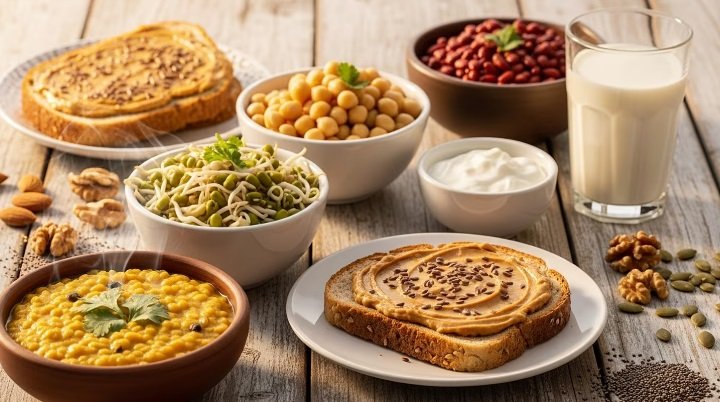
Dairy products remain one of the simplest ways for vegetarians to add protein. Two glasses of milk can provide about 16 grams, while a bowl of curd contributes another 8–10 grams. Paneer is especially rich, offering nearly 18 grams per 100 g serving. Greek yoghurt or hung curd are also excellent options, giving a thicker texture and higher protein punch. Including dairy in breakfast or lunch ensures a steady start to the day’s protein count.
Soy: The Vegetarian Superfood
Soy products are among the most concentrated plant‑based proteins. A 100 g serving of tofu contains 12–15 grams, while a cup of cooked soya chunks can deliver up to 25 grams. Raj recommends incorporating soy foods three to four times a week, whether in stir‑fries, curries, or salads. Their versatility makes them easy to adapt to different cuisines, and they help bridge the gap when aiming for higher daily totals.
Pulses and Legumes: Everyday Staples
Indian kitchens are already rich in pulses like dal, chickpeas, rajma, and sprouts. A single bowl of dal provides 7–10 grams of protein, and combining pulses with rice or roti improves the overall protein quality. Sprouts, black chana, and green gram can be added to salads or breakfast bowls for extra nutrition. These foods are not only affordable but also form the backbone of a vegetarian protein plan.
Nuts and Seeds: Small but Mighty
Nuts and seeds may look like snacks, but they pack a powerful protein boost. Almonds, peanuts, chia, flax, pumpkin, and sesame seeds can be sprinkled over meals or eaten on their own. Peanut butter spread on whole wheat bread is a quick and tasty way to add protein. These foods also provide healthy fats, making them a double win for energy and satiety.
Building a Balanced Day
It is advised to spread protein across four to five meals instead of consuming it all at once. A sample plan could include milk and sprouts for breakfast, dal and curd at lunch, nuts as snacks, and paneer or tofu for dinner. This distribution helps the body absorb and utilise protein more effectively.