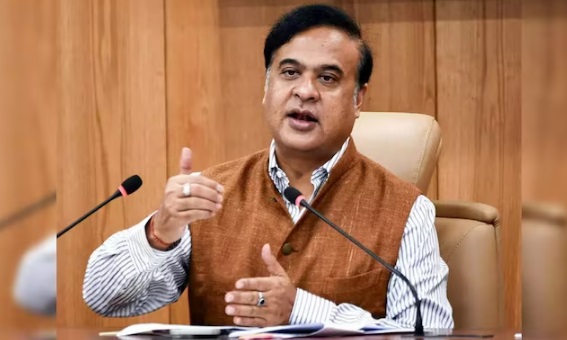
New Delhi: The BJP government in Assam led by Chief Minister Himanta Biswa Sarma on Monday introduced the Uniform Civil Code (UCC) in the Assam Legislative Assembly.
Assam Parliamentary Affairs Minister Atul Bora tabled “The Uniform Civil Code, Assam, Bill, 2026″. The Bill is expected to be taken up for discussion and passage on May 27.
Ahead of the Assembly session that convened on May 21, Sarma had said implementing the Uniform Civil Code has been a long-standing commitment of his government. “It has been our long-term commitment that if I returned as Chief Minister, we would move ahead with implementing the UCC,” he said.
“The Uniform Civil Code will primarily cover the following four subjects – minimum age of marriage, prohibition of polygamy, equal rights for daughters in the property of parents and matters relating to live-in relationships,” the Chief Minister had said.

The debate around the Uniform Civil Code has remained one of India’s most discussed constitutional and political issues for decades. Article 44 of the Constitution urges the State to work towards a common civil code for all citizens, irrespective of religion.
While India largely follows religion-based personal laws in matters such as marriage, divorce, inheritance and adoption, only a few states have moved towards implementing a uniform framework.
If the bill is passed, Assam will become the third state in the country to pass a UCC bill, following the example of Uttarakhand and Gujarat.
Goa
Goa holds the distinction of being the first to have a common civil code that has existed since the colonial era. It has been in effect since the territory was a Portuguese colony under the Portuguese Civil Code of 1867 and continued even after Goa became a part of India in 1961.
Under this system, a common set of laws governs marriage, divorce, succession and property rights for all communities, irrespective of religion. The code mandates compulsory marriage registration and provides equal property rights to spouses in many cases.
However, certain limited exceptions continue for specific communities and customs. Despite these exceptions, Goa has frequently been cited by courts and policymakers as a working model for a nationwide UCC. The Supreme Court has also referred to Goa as an example of a functioning common civil code.
Uttarakhand
Uttarakhand became the first Indian state after Independence to formally implement a Uniform Civil Code. The Uttarakhand Assembly passed the UCC Bill in February 2024, and the law officially came into force on January 27, 2025.
The law applies to all residents of the state except Scheduled Tribes protected under the Constitution. It introduces uniform rules governing marriage, divorce, inheritance, succession and live-in relationships.
One of the key features of the UCC here is mandatory registration of marriages and live-in relationships. The law also bans practices such as polygamy and aims to provide equal rights to women in inheritance and family matters.
The BJP government in the state described the move as a step towards gender justice and equality, while critics argued that some provisions interfered with personal freedoms and minority customs.
Gujarat
Gujarat became the latest state to adopt a Uniform Civil Code after the Gujarat Assembly passed the UCC Bill in March 2026.
The Gujarat law seeks to establish a common legal framework for personal laws related to marriage, divorce, maintenance, inheritance and adoption across communities. Like Uttarakhand, the Gujarat model also includes provisions for compulsory registration of marriages and restrictions on polygamy.
The state government described the legislation as a major reform aimed at ensuring equal rights and legal uniformity. Opposition parties and some civil society groups, however, raised concerns over religious freedom and implementation challenges.
The implementation of UCC at the state level has intensified the national debate over balancing constitutional equality with religious and cultural diversity. While supporters see it as a step toward gender justice and national integration, critics argue that India’s diversity requires protection of community-specific customs and traditions.