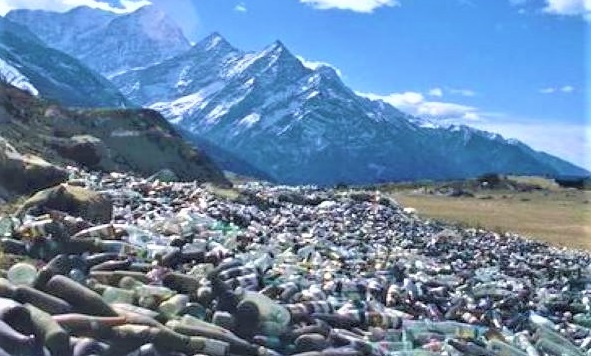
New Delhi: The Himalayas do not look fragile.
At first light, they rise with authority. For most travellers, the first instinct is to stand still and take it in, to believe this landscape is too vast to be altered by one visit.
But every step leaves something behind.
On a narrow trail above the tree line, it may be a biscuit wrapper caught between rocks. Near a stream, it may be a plastic bottle left after a picnic. Around a popular stop, it may be a wet wipe buried under soil, a disposable cup tossed behind a tea stall, or a glass bottle carried up and then abandoned.
The mountains may look endless from a distance. Up close, they are far more delicate.
As more people travel across the Indian Himalayan Region, the question is no longer whether people should visit the mountains. It is how they can do so with more care.
Responsible travel does not need to feel complicated. It can begin with a few small choices before, during, and after the trip.
1. Carry back what you carry in
Before you leave for a trek, road trip, pilgrimage, or short mountain walk, keep a small reusable waste bag in your backpack.
Use it for wrappers, bottle caps, tissues, wet wipes, medicine strips, snack packets, and anything else that does not belong on the trail. In many remote mountain regions, waste collection is limited. Even when a dustbin is available, the waste may still have to be carried down, segregated, transported, and processed elsewhere.
This is somethingPradeep Sangwan has seen closely. His work with Healing Himalayas grew from clean-up drives into a larger effort across remote regions, with over 1,000 clean-up drives, 2,000+ tonnes of waste removed, and nine Material Recovery Facilities set up in mountain areas.
For travellers, the lesson is simple: do not wait for someone else to clean up what you carry in.
Pack a cloth bag for dry waste, a reusable bottle, steel or reusable snack boxes, cutlery, and a small container for leftovers. If you use sanitary products, medicine strips, or wet wipes, carry them back until you reach a proper disposal point.
One wrapper may look harmless. Across a crowded route, hundreds of such choices become the problem.
2. Reduce plastic before the trip begins
The easiest waste to manage is the waste that never enters the mountains.
Before leaving, repack snacks into reusable boxes instead of carrying several small packets. Carry a refillable water bottle. Avoid single-use cups, plastic spoons, straws, disposable rain ponchos, wet wipes, and small toiletry sachets.
This matters because mountain waste is harder to manage than urban waste. Transport is difficult, weather can disrupt collection, and many remote areas have limited segregation and recycling systems.
Plastic-free travel does not require a perfect kit. It needs a little planning.
Carry one bottle and refill it. Pack snacks in boxes. Use a handkerchief or quick-dry towel instead of wet wipes. Carry toiletries in refillable containers. Avoid buying packaged water at every stop.
The less you bring in, the less the mountains have to deal with after you leave.
3. Choose stays that work with the landscape
A mountain stay can shape the footprint of your trip.
Before booking, look beyond the view. Check whether the stay uses local materials, manages water carefully, reduces plastic, employs people from nearby villages, and serves local food.
In Himachal Pradesh’s Tirthan Valley, Dimple Kamra and Uppi builtGone Fishing Cottages using local stone, reclaimed wood, compost pits, a biodigester, and solar energy. The property also reduces single-use plastic through dispensers, bamboo straws, biodegradable garbage bags, and steel or copper thalis for picnics.
The point is not to look for perfection. It is to look for intention.
Before booking a stay, ask: Do they provide drinking water refills? Do they avoid single-use plastic? How do they handle food waste? Do they compost? Do they hire locally? Do they tell guests about local customs and waste rules?
A good stay will usually have clear answers, or at least a clear effort.
4. Eat local, hire local, and listen
In the mountains, local guides, cooks, drivers, porters, farmers, and homestay owners carry knowledge that no route map can give you.
A local guide knows which trails are safe after rain, where a traveller can dispose of waste, which areas are culturally sensitive, and when the weather may turn. A local meal reduces dependence on packaged food and supports nearby kitchens, farmers, and small businesses.
Across India,community-led travel groups are showing how travel can be shaped by people who live in the region, through village meals, treks led by locals, and journeys rooted in everyday lives.
For travellers, this can be simple.
Hire a local guide instead of taking unverified shortcuts. Eat at local homes, dhabas, or community-run kitchens. Buy from local artisans. Ask before photographing people, homes, or rituals. Learn basic customs before visiting a village.
Responsible travel also means remembering that the Himalayas are home to people, livelihoods, cultures, and everyday routines.
5. Skip crowded routes for slower, nature-led experiences
Some hill destinations receive far more visitors than they can comfortably handle during peak seasons. The signs are visible: traffic jams, overflowing waste, pressure on water, crowded viewpoints, and stressed local services.
One way to reduce that pressure is to look beyond the most crowded roads and checklist-style itineraries.
Instead of rushing from one viewpoint to another, choose experiences that help you stay longer, move slower, and understand the region more closely: plantation walks, tea tasting, birdwatching, local food, nature trails, heritage train rides, or guided walks through farms and forests.