NEW DELHI : Karwa Chauth is one of the important fasts observed by married Hindu women. On this day, women observe a nirjala vrat, or a fast without food and water, while praying for their husband’s long life and a happy married life. After the evening puja, the Moon is offered water and the fast is traditionally broken by drinking water from the husband’s hands.
With Karwa Chauth 2026 approaching, one of the first things to know is the exact date of the vrat. According to the Panchang, the Chaturthi tithi in the month of Kartik will begin at 1:07 am on October 28 and end at 10:11 pm on October 29. Based on the Udaya Tithi, Karwa Chauth will be observed on October 29.
When is Karwa Chauth 2026?
Karwa Chauth holds special significance in Sanatan Dharma and is traditionally associated with marital well-being and the long life of one’s husband. In 2026, the vrat will be observed on October 29. According to the Panchang, Paridhi Yoga will be formed on the day, while the Moon will transit Taurus. Gauri Yoga will also be formed.
When does the Chaturthi tithi begin and end?
The Kartik Chaturthi tithi will begin at 1:07 am on October 28 and conclude at 10:11 pm on October 29. Since the tithi falls on October 29 according to the Udaya Tithi calculation, the Karwa Chauth vrat will be observed on that day.

What is the significance of Karwa Chauth?
Karwa Chauth is considered significant in religious traditions and is associated with marital happiness and the well-being of married women. There is a belief that worshipping Goddess Parvati on this day brings akhand saubhagya, or lasting marital prosperity. Karwa Mata and Lord Ganesha are also worshipped during the rituals.
Married women observe the fast with prayers for their husband’s long life and a happy married life. Unmarried women may also observe Karwa Chauth while praying for a good life partner.
Karwa Chauth puja vidhi
The day begins with a bath, followed by taking a sankalp, or a vow, to observe the fast. In many places, there is also a tradition of eating sargi before sunrise. Women then observe the fast through the day while keeping their focus on God.
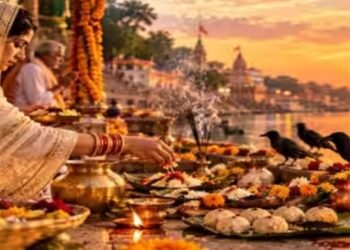
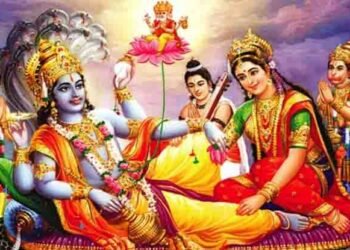
In the evening, the puja area is cleaned before Lord Shiva, Goddess Parvati, Lord Ganesha and Lord Kartikeya are worshipped. This is followed by the worship of Karwa Mata, lighting a lamp and listening to the Karwa Chauth vrat katha.
Offering water to the Moon
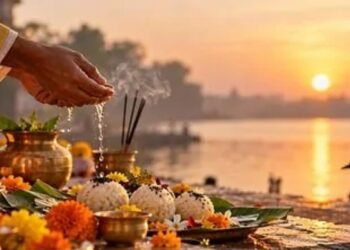
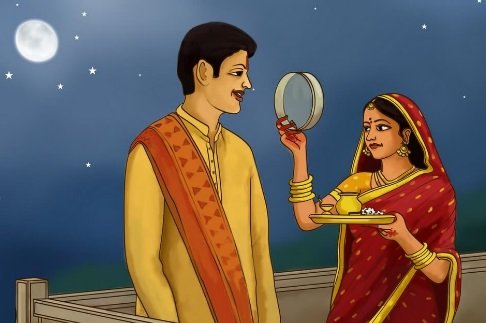
Once the evening puja is complete, devotees wait for the Moon to rise. After the Moon appears, women traditionally view it through a sieve and offer water to it. They then look at their husband through the sieve.
After viewing the Moon and offering the arghya, the fast is traditionally broken by drinking water from the husband’s hands.