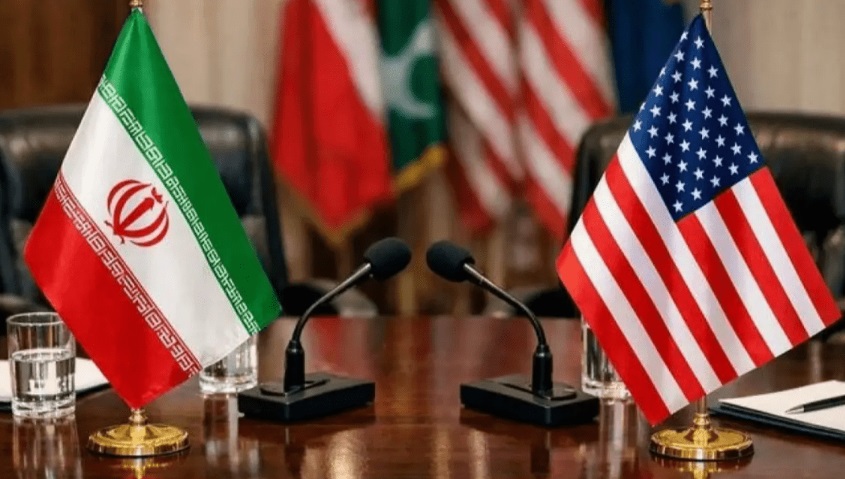
NEW DELHI : As Washington and Tehran prepare to formally sign a peace agreement on June 19, policymakers, businesses and investors across the world will be watching closely. For India, however, the significance of the deal extends far beyond geopolitics.
The proposed agreement, expected to reopen the Strait of Hormuz after more than three months of conflict, could ease pressure on energy prices, reduce inflation risks, strengthen the rupee and provide fresh momentum to trade and investment. If implemented successfully, economists believe India could emerge as one of the biggest economic beneficiaries of a durable US-Iran rapprochement.
The reason is simple: few major economies are as exposed to developments in the Gulf as India.
Why The Strait Of Hormuz Matters To India
The Strait of Hormuz is one of the world’s most critical energy chokepoints, carrying nearly one-fifth of global oil and gas trade.

The conflict that erupted in late February disrupted crude oil flows, pushed shipping insurance costs sharply higher and fuelled concerns about global energy security. For India, which imports the bulk of its energy requirements, the fallout was immediate.
India sources around half of its crude oil imports, nearly 70 per cent of its LPG supplies and close to 90 per cent of its LNG imports from West Asia. The disruption contributed to higher energy costs, pressure on the rupee and concerns over imported inflation.
Now, with the proposed agreement expected to restore navigation through Hormuz, markets are beginning to price in a return to normality.
Brent crude has already fallen into the low-$80-per-barrel range after news of the agreement emerged.
Cheaper Oil Could Ease Pressure Across The Economy
For India, the most immediate benefit would likely come through lower and more stable crude oil prices.
Rohit Aggarwal, Founder and CIO of Ro Fund Management, says a successful US-Iran agreement would represent far more than a diplomatic breakthrough.
“History shows that major geopolitical developments in West Asia rarely remain confined to the region. Their economic consequences are typically transmitted through energy markets,” he said.
According to Aggarwal, softer crude prices would reduce India’s import bill, ease pressure on the current account deficit and provide support to the rupee.
He points to estimates from ICRA suggesting that every $10-per-barrel increase in crude oil prices can raise India’s net oil import bill by approximately $13-14 billion and widen the current account deficit by around 0.3 per cent of GDP.
The reverse could now work in India’s favour.
NDTV reported that a sustained normalisation of energy flows could potentially shrink India’s current account deficit by as much as $15 billion while reducing pressure on the currency.
Could Inflation Finally Get Some Relief?
The benefits may not stop at oil imports.
Lower crude prices tend to ripple across the economy, affecting everything from transport and logistics costs to fertiliser prices and manufacturing expenses.
South Asian Herald reported that economists expect easing oil prices to provide fiscal breathing room by reducing pressure on fuel and fertiliser subsidies.
For households, that could eventually translate into lower inflationary pressures and improved purchasing power.
For policymakers, it could offer greater flexibility in managing public finances at a time when subsidy burdens have risen sharply following months of elevated global energy prices.
The Hormuz Effect Goes Beyond Oil
While crude oil dominates headlines, trade experts argue that the reopening of Hormuz could have a much broader impact on business sentiment.
Dhruv Taneja, Founder and Global CEO of MatchLog Solutions, believes the biggest gain may be predictability.
“The reopening of the Strait of Hormuz is an important stabilising development for global trade. While attention naturally focuses on crude oil and fuel prices, the larger impact is on market confidence,” he said.
“Prolonged uncertainty around key maritime corridors tends to influence shipping costs, insurance premiums, procurement decisions and overall trade sentiment.”
According to Taneja, smoother movement through the corridor will support planning certainty across supply chains.
“The immediate value lies less in dramatic cost reductions and more in restoring planning certainty for businesses. In global trade, stability is often what enables efficiency, investment and sustained growth.”
Industry executives quoted by TOI expect freight and insurance costs to decline as shipping routes normalise and tanker availability improves.
Trade, Exports And A Potential Gulf Revival
Indian exporters could also benefit.
According to the Federation of Indian Export Organisations (FIEO), cited by South Asian Herald, lower freight costs and improved supply-chain reliability could support trade with Gulf markets.
The timing is notable.
India’s combined merchandise and services exports rose 14.66 per cent year-on-year to $162.69 billion during April-May FY2026-27, while merchandise exports increased 16.09 per cent to $88.91 billion. A smoother trading environment could further strengthen that momentum.
Agriculture may also gain from more reliable supplies of fertilisers and agrochemical inputs, helping reduce input-cost pressures for farmers, according to industry bodies quoted by South Asian Herald.
Iranian Oil Could Return To India’s Radar
Another closely watched development is the potential return of Iranian crude.
Prior to sanctions, India imported roughly 300,000 barrels of oil per day from Iran. Reports indicate that sanctions relief could eventually allow Tehran to re-enter global energy markets more fully, increasing overall supply and adding downward pressure on prices.
For Indian refiners, Iranian crude has historically been attractive because of its quality and compatibility with domestic refining infrastructure.
A return of Iranian barrels to global markets would also increase competition among suppliers, potentially improving India’s negotiating position.
Chabahar And The Strategic Opportunity
The implications are not limited to energy.
A lasting détente could accelerate India’s connectivity ambitions in the region, particularly through the Chabahar Port project and the International North-South Transport Corridor (INSTC).
According to NDTV, sanctions relief could help revive progress on both projects, strengthening India’s access to Central Asia and Russia while bypassing Pakistan.
For a country seeking to diversify trade routes and build supply-chain resilience, the strategic value could be considerable.
A Big Opportunity, But Not Without Risks
Despite the optimism, analysts caution against assuming an immediate return to normality.
Energy infrastructure across parts of the Gulf still requires repairs, while shipping operators and insurers will want confidence that the ceasefire can hold.
Prashant Vasisht of ICRA, quoted by South Asian Herald, estimates that around 10-11 million barrels per day of West Asian production remains offline, suggesting crude prices may remain in the $80-$90 range for some time before fully normalising.
There are geopolitical uncertainties too.
Israel’s reservations about the agreement and the possibility of renewed regional tensions remain key risks that markets will continue to monitor.
Why June 19 Matters
For India, the June 19 signing ceremony is about far more than diplomacy.
A successful agreement could lower energy costs, ease inflation, support the rupee, improve trade competitiveness and strengthen economic growth prospects. It could also reopen strategic opportunities that have remained constrained for years.
As Rohit Aggarwal puts it, the story is not simply about cheaper oil.
“It is about lower uncertainty, stronger macroeconomic resilience and a more favourable environment for businesses, investors and long-term economic growth.”
If the agreement holds, India may find itself among the biggest economic winners of a peace deal signed thousands of kilometres away.