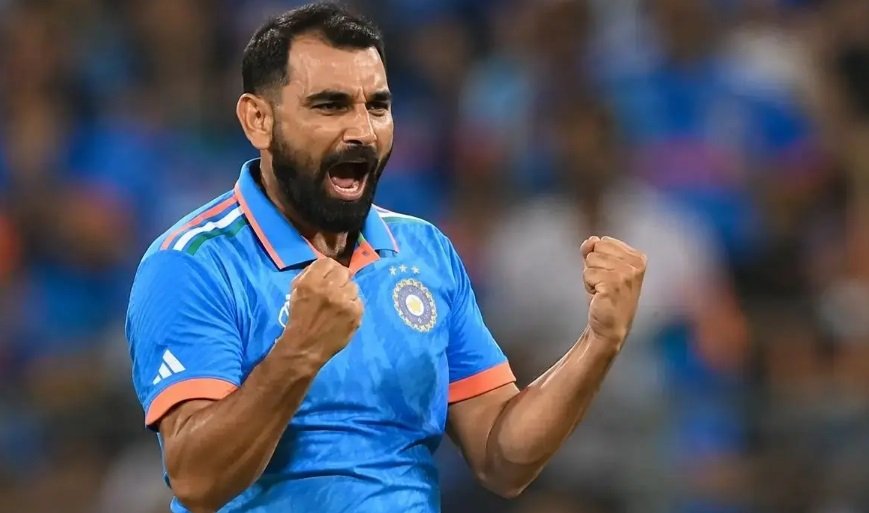
NEW DELHI: Mohammed Shami has been making a compelling case for India comeback, producing solid domestic performance one after the other. The veteran fast bowler, out of the national setup since the 2025 ICC Champions Trophy, has kept the debate alive about his international future with his performances for Bengal and East Zone.
Playing his first Ranji Trophy match of the season against Delhi, Shami claimed four wickets and conceded just 30 runs in 17.3 overs he bowled, which included nine maidens. The spell was a timely response to questions surrounding his fitness, rhythm and readiness to return to international cricket.
At 36, Shami is fighting against more than the competition for places. Time is also a factor, with India beginning to shape their plans for the 2027 ODI World Cup.
The recent return of Bhuvneshwar Kumar to India’s T20I squad has added another dimension to the discussion. Bhuvneshwar has been recalled to the side after a gap of four years following impressive form for Royal Challengers Bengaluru (RCB) in the IPL.

The question is, if Bhuvneshwar can earn another opportunity through sustained performances, does Shami’s domestic record deserve a similar pathway back into the Indian team – especially in the 50-over format.
Shami’s domestic numbers demand attention
Shami’s case is built on more than one good performance. The 2025-26 season overall was a productive one across formats, showing he could still perform in a range of conditions and workloads. He claimed 37 wickets in seven Ranji Trophy matches, helping Bengal reach the semi-finals. He picked 15 wickets in seven Vijay Hazare Trophy matches and 16 wickets in seven Syed Mushtaq Ali Trophy appearances.
Those numbers matter because they show that Shami has continued to take wickets in red-ball, 50-over and T20 cricket. His Ranji Trophy returns are a pointer to his ability to bowl spells over long periods, while his figures in the Vijay Hazare Trophy are particularly relevant to selectors considering a potential ODI comeback.
He carried the form to the 2026 Duleep Trophy, where he picked seven wickets for East Zone as the side won the competition for the first time in 14 years. The campaign also coincided with his 100th first-class appearance, another milestone in a career built around perseverance and skill.
The Ranji Trophy performance against Delhi has now provided a fresh data point. Shami dismissed Yash Dhull and Ayush Doseja before removing Hrithik Shokeen and finishing the innings by bowling out Divij Mehra. His nine maidens and economy rate of 1.71 were as notable as the four wickets. They demonstrated his ability to build pressure rather than depend exclusively on bursts of wicket-taking.
Shami also made his position clear when asked about concerns surrounding his fitness. “You can see my fitness. Write it. You are watching me,” he told reporters, insisting that his job was to keep bowling and playing wherever opportunities were available.
Bhuvneshwar Kumar’s comeback raises questions
Bhuvneshwar’s return to the Indian T20I squad after a four-year gap has inevitably invited comparisons with Shami. Both are experienced fast bowlers who have continued to perform domestically despite spending extended periods outside the national team. Bhuvneshwar makes a return for the New Zealand T20I series after his clinical shows in IPL. He registered 45 wickets in 30 IPL matches across the 2025 and 2026 seasons, making it difficult for the selectors to ignore.
Shami, meanwhile, has been more prolific in domestic cricket, particularly in the longer formats. His 37 Ranji Trophy wickets last season and the latest four-wicket haul against Delhi have kept his name in the conversation.
However, the two cases are not identical. Bhuvneshwar’s recall is for T20Is, while Shami’s most compelling argument is for ODI cricket. Selection decisions have to take into account the demands of the various formats, their recent workload, and the role the player will be playing for the team. Bhuvneshwar’s comeback does not guarantee that Shami will receive the same treatment. It does, however, underline that an extended absence from international cricket need not automatically end a player’s prospects.
Should India select Shami for 2027 ODI World Cup?
Shami is a strong contender to be considered for the ODIs. He has picked over 200 ODI wickets and was the highest wicket-taker for India at the 2023 ODI World Cup, ending with 24 scalps in just seven matches. His ability to extract movement, strike in clusters, and most importantly his experience makes him a valuable option.
Conditions at the 2027 World Cup, to be co-hosted by South Africa, Namibia and Zimbabwe, will differ between venues. The selectors will need bowlers capable of exploiting movement, maintaining control and taking wickets during the middle overs, and Shami fits in all three. His domestic performances suggest that he still has the appetite and skill to compete, while his latest Ranji Trophy spell provides encouragement about his current readiness.
India’s pace battery needs experience as well as depth
India’s preparations for the 2027 World Cup will require a pace attack capable of adapting to different conditions and managing the demands of a long tournament. Jasprit Bumrah remains central to those plans, subject to fitness and workload management. Selectors will also need to consider the consistency and availability of the other fast bowlers in contention. Shami’s experience could provide valuable depth. His ability to take wickets with the new ball and return for difficult spells is what Shami brings to the table.