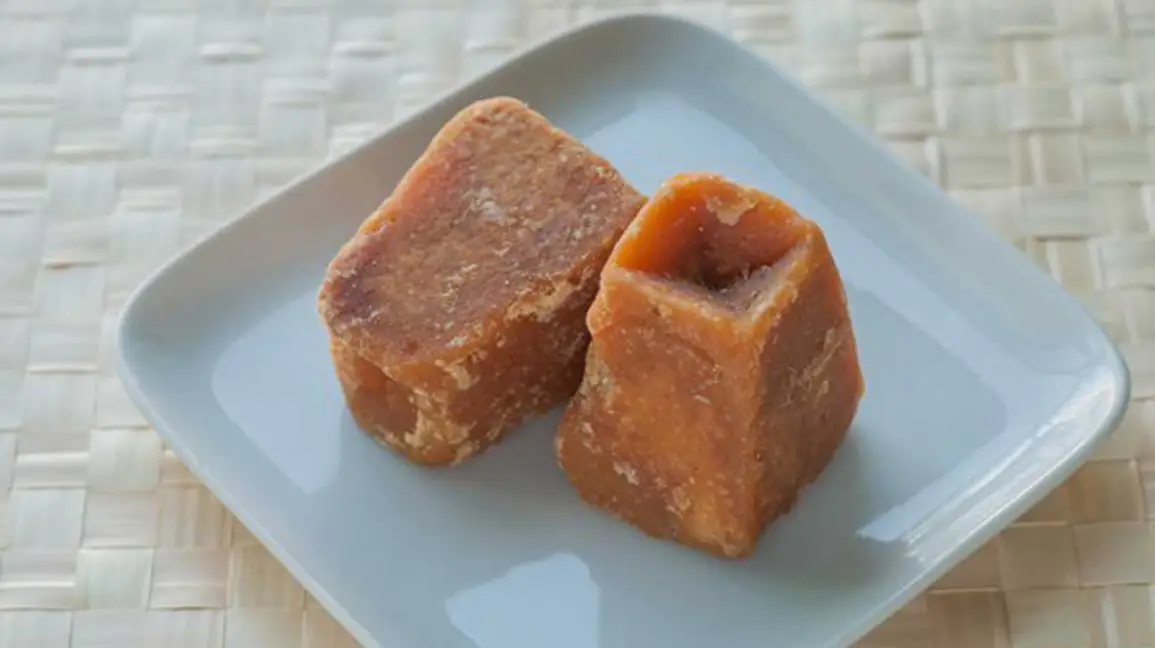
Jaggery is an unrefined natural sweetener widely used in Asia and Africa. Often hailed as a “healthier sugar alternative,” it is gaining popularity among those seeking natural ways to sweeten foods and beverages. Unlike refined white sugar, jaggery retains its molasses content, which contributes small amounts of vitamins and minerals.
What is Jaggery?
Jaggery, sometimes called “non-centrifugal sugar,” is made primarily from sugarcane or date palm sap. Its production avoids the chemical and centrifuge processes used to refine white sugar, allowing it to retain nutrients naturally present in the juice. Across the world, similar unrefined sugar products exist under various names: gur in India, panela in Colombia, piloncillo in Mexico, tapa dulce in Costa Rica, namtan tanode in Thailand, gula melaka in Malaysia, and kokuto in Japan. India accounts for around 70% of global jaggery production.
How is Jaggery Made?
The traditional preparation of jaggery involves three main steps:
-
Extraction: Juice is pressed from sugarcane or palm.
-
Clarification: The juice is allowed to settle, and impurities are removed.
-
Concentration: The juice is boiled in large pans, stirred continuously, and skimmed until it forms a thick, dough-like paste.
This paste is cooled and molded into blocks, granules, or liquid forms. Its color ranges from golden yellow to dark brown, with lighter shades often considered higher quality due to higher sucrose content and lower impurities.

Nutritional Profile
Jaggery provides more nutrients than refined sugar thanks to the molasses it contains. A 100-gram serving can offer:
-
Calories: 383
-
Sucrose: 65–85 g
-
Iron: 11 mg (61% of RDI)
-
Magnesium: 70–90 mg (20% of RDI)
-
Potassium: 1050 mg (30% of RDI)
-
Manganese: 0.2–0.5 mg (10–20% of RDI)
However, realistic consumption is much lower—typically a tablespoon (20 g) or teaspoon (7 g), providing modest amounts of these nutrients.
Uses in Food and Drink
Jaggery is versatile in cooking and baking. In India, it is used in desserts like jaggery cake and chakkara pongal, as well as in sweets with coconut, peanuts, and condensed milk. It is also used in beverages, such as tea or coffee, and in traditional alcoholic drinks like palm wine. Outside India, it is commonly used as a sugar substitute in baked goods and health-focused recipes.
Health Benefits: Fact vs. Myth
Jaggery is sometimes associated with health benefits, though many claims are overstated:
-
Digestive Health: Despite anecdotal claims, jaggery lacks fiber and is unlikely to significantly improve digestion.
-
Anemia Prevention: Contains iron, but realistic serving sizes provide only a small fraction of daily needs.
-
Liver Detoxification: No scientific evidence supports jaggery aiding liver detox.
-
Immune Support: Minerals and antioxidants are present but not in levels high enough to meaningfully boost immunity.
In summary, jaggery is a slightly more nutritious alternative to refined sugar, but it is still sugar and should be consumed in moderation. It can enhance flavors in cooking and provide minor nutrient benefits without replacing a balanced diet.