New Delhi : Burnout rarely arrives as a dramatic collapse. More often, it creeps in quietly through restless sleep, constant mental chatter, irritability, shallow breathing, and a body that never fully switches off. In a culture that rewards productivity and being busy, these signals are easy to dismiss. Yet health experts increasingly warn that burnout is not just emotional fatigue, but a deeper dysregulation of the nervous system that requires intentional recovery.
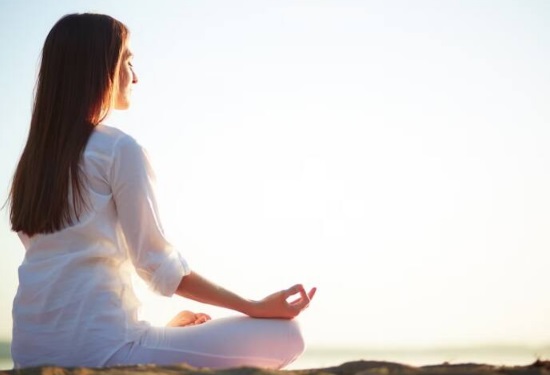
Yoga, long associated with flexibility and fitness, is now gaining recognition as a powerful tool for stress recovery. Not as an escape from burnout, but as a way to retrain the body and mind to rest, regulate, and respond more gently to life’s demands.
Divya Rolla, yoga expert at Cult, describes burnout not as a sudden event, but as a gradual depletion. “Burnout creeps in silently and powerful through tight jaws, restless sleep, irritability, hurried meals, anxiety and that constant feeling of being ‘on’,” she says. In the Iyengar tradition, burnout is understood as a depletion of prana – the life force that sustains both body and mind.
Rather than pushing through fatigue, yoga encourages pausing and listening. Rolla notes that many burnt-out individuals breathe high into the chest, keeping the nervous system in a state of vigilance. “A burnt-out nervous system lives in the upper chest. It is reactive and fast,” she explains. The practice begins by guiding the breath downward, softening the diaphragm and inviting the parasympathetic nervous system – the body’s rest-and-repair mode – to activate.
The Role Of Supported Postures
During burnout, doing more can often worsen exhaustion. Both experts emphasise that restorative yoga, rather than intense flows, plays a critical role in recovery. Rolla explains that in Iyengar yoga, props are essential tools, not shortcuts. “Supported postures like Supta Baddha Konasana, Viparita Karani and Adho Mukha Virasana become sanctuaries,” she says. These poses calm the nerves, release internal tension, and allow the body to experience safety again.
Mihir Jog, yoga teacher and Ayurveda practitioner, echoes this approach. “Yoga uses the body as a vehicle to settle mental agitation,” he explains, adding that forward folds, Child’s Pose, and Halasana help release stored tension and rest the frontal brain, which is often overstimulated during chronic stress.
Breathwork As A Tool For Regulation
Breath, or pranayama, is introduced only once the body feels supported and quiet. Rolla recommends beginning simply, with slow nasal breathing and slightly longer exhalations. “The exhalation becomes a medicine as it steadily starts dissolving agitation and clearing mental fog,” she notes. Over time, techniques like Viloma and Ujjayi pranayama build steadiness and awareness.
Jog highlights additional practices such as Bhramari, Anulom Vilom, and Savitri pranayama, all of which help signal safety to the nervous system. “With consistent practice, we learn to recognise stress early and consciously regulate it,” he says.
Both experts stress that recovery requires consistency rather than intensity. “Burnout recovery is a re-education of the nervous system,” Rolla explains, noting that a few minutes of daily practice is more effective than occasional long sessions. Over time, this builds resilience, clarity, and emotional steadiness.
Burnout does not resolve through rest alone. It requires reconnection. Yoga offers a structured yet gentle pathway back to the body, the breath, and a sense of inner steadiness. By calming the nervous system and restoring awareness, it helps transform exhaustion into a grounded state of presence.