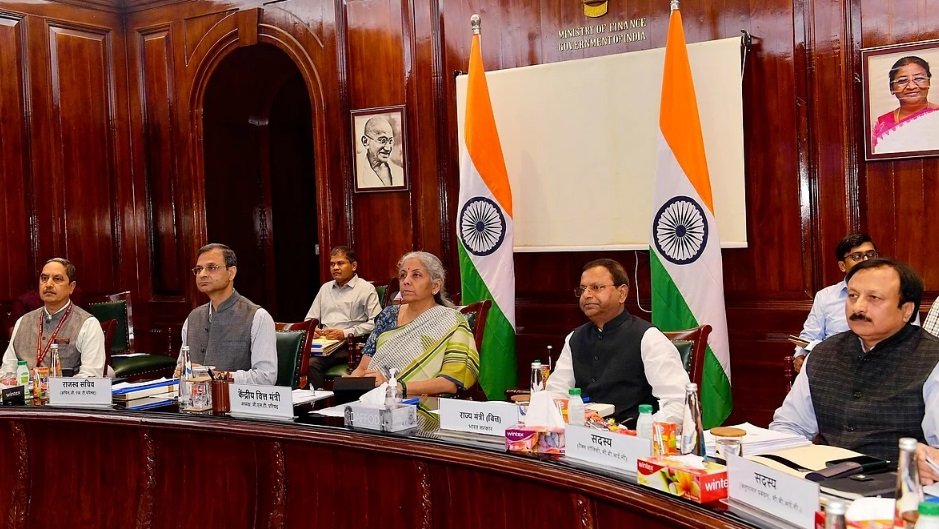
NEW DELHI : Process reforms is the key theme of the upcoming GST Council meeting, scheduled to take place on October 7. Earlier today, in a LinkedIn post, Finance Minister Nirmala Sitharaman wrote that the key proposals under consideration of the Council address registration, returns, refunds, disputes and improved flow of input tax credit, with the aim of reducing the time and cost of compliance.
“Taxpayer experience must continue to guide implementation. GST’s growing maturity gives us a stronger foundation for the next stage of reform,” Sitharaman said in her post.
Moneycontrol looks at the key achievements of the indirect tax regime—which was first introduced in 2016 primarily to enhance ease of doing business for firms, and reduce taxation on goods and services. The infographic below gives a short and brief snapshot of the GST regime’s key features, and the revenue details for the full year FY26 and for the period April-August of FY27.
Last year, in September 2025, the GST Council had undertaken a major revamp of the GST structure to further reduce the tax rates on goods and services. The Council had changed the four-slab structure into a three-slab one; and rationalised categories of goods and services to reduce compliance friction, and address classification disputes.

Sitharaman in her post noted that between October 2025 and July 2026, the value of reported taxable supplies (goods and services which attract tax) grew by 25.8 percent over the corresponding period a year earlier. “A lighter rate structure has been accompanied by a substantial expansion in reported economic activity. This is an encouraging foundation for a reform intended to support both enterprise and public finances.”
“That resilience is visible in the latest revenue figures. Gross GST collections reached Rs 12.46 lakh crore during April–September 2026, up 11.6% over the corresponding period last year. Every month from June through September recorded double-digit annual growth; together, collections for these four months accelerated by nearly 15 percent,” Sitharaman said.
What the industry is asking for?
Allow genuine taxpayers holding a valid invoice to claim ITC, is the most significant ask of the industry. At the moment, genuine taxpayers (businesses) are unable to claim ITC, if the supplier fails to deposit the input tax collected (by the business) to authorities.
They also seek a time-bound mechanism to utilise or refund cess balances stranded after compensation-cess discontinuance (in 2025).
Auto dealers purchased inventory from vehicle manufacturers (OEMs) last year by paying GST plus an additional GST compensation cess (varying from 1-22 percent). Under normal GST rules, this paid cess was accumulated as ITC in the dealer’s Electronic Credit Ledger and offset when selling vehicles to end customers. However, since compensation cess doesn’t exist anymore, the Rs 2,500 crore in input cess credits became completely stranded/locked in electronic ledgers. Dealers cannot use it to pay GST on new sales, nor can they claim a cash refund under existing statutory provisions.
On the litigation front, industry seeks to bar notices where the tax demand is below Rs 10,000 (about 20% of cases by number), extending to pending adjudication and appeals. They also seek guidelines on drafting and service of notices, distinguishing fraud/suppression from bona fide short payment, personal hearing, and speaking orders.
And on registration, the industry is asking a guided, single-attempt application with tailored document lists; carry-over of data from an existing GSTIN; simultaneous multi-state applications; automatic jurisdiction allocation; risk-based and time-bound approval for larger low-risk businesses.
Key proposals under consideration
Moneycontrol reported earlier that the Council may deliberate on decriminalising offences under the indirect tax regime, and specifically discuss whether powers of arrest should be retained by the authorities, sources said.
The current GST framework gives the Commissioner the power under Section 69 of the CGST Act to authorise arrest where there are reasons to believe that a person has committed specified serious offences under Section 132–particularly cases involving fake invoicing, fraudulent input tax credit, fake refunds or deliberate tax evasion.
What is now being discussed is removing the GST law’s standalone arrest provisions altogether, the sources said. This would mean that a GST officer would no longer have the Section 69 route to arrest a taxpayer during a GST investigation. This proposal was part of the broader suggestions made by GST Council’s Law Committee on decriminalisation.
The Council may also address a tax anomaly that has affected India’s services exporters, particularly global capability centres (GCCs).
GCCs, the India units of multinational firms, undertake engineering, product development and testing for their overseas group companies and are paid in foreign exchange. However, such services can still attract 18 percent GST because of rules determining where a service is considered to have been delivered.
If an overseas group sends goods to its Indian centre and the centre carries out work on those goods, the law treats the service as delivered in India rather than abroad. This takes it outside the export category, even though the client is overseas and pays in foreign exchange. The proposed amendment would allow such services to qualify as exports, meaning no GST would be charged and tax paid on inputs could be refunded.
Additionally, the Council approved the release of 90 percent of eligible refunds within seven days in September 2025, but an officer still has to determine whether a taxpayer qualifies as low-risk before the money is released.
The proposal is to use a risk score to make that assessment. The system would evaluate each claim against the taxpayer’s records and filings. Claims that match the available data would be treated as low-risk and eligible for automatic release, while mismatched claims would be held back.