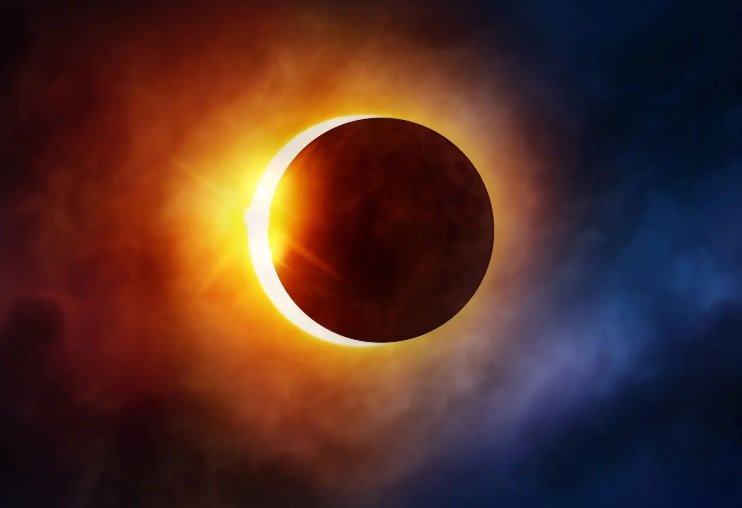
New Delhi: August 2026 will witness both a solar eclipse and a lunar eclipse, something that naturally raises plenty of questions every time it happens. Many people are wondering whether these eclipses will be visible in India, whether the Sutak period will apply, and if they will have any impact on festivals such as Raksha Bandhan.
According to the Hindu calendar, the solar eclipse will occur on Shravan Amavasya, while the lunar eclipse will fall on Shravan Purnima, the day Raksha Bandhan is celebrated. Here’s everything you need to know.
When will the August 2026 eclipses occur?
The first eclipse of the month will be a total solar eclipse on August 12. According to Indian Standard Time, it will begin at around 9:04 pm on August 12 and continue until approximately 4:25 am on August 13. The eclipse will be visible in parts of Europe, Spain, Greenland, Iceland and Russia.
The second eclipse will be a lunar eclipse on August 28. It will begin at around 8:04 am and end at approximately 11:22 am. This eclipse will be visible in Africa, North America, South America, Europe, Afghanistan, Pakistan and Saudi Arabia.

Will the August 2026 eclipses be visible in India?
Neither of the two eclipses will be visible in India. According to astrological beliefs, only eclipses that are visible in a particular region are considered to have religious significance in that area.
As a result, both the solar eclipse and the lunar eclipse in August 2026 are not expected to have any religious impact in India.
Will Sutak be observed?
Since neither eclipse will be visible in India, the Sutak period will not be observed, according to astrological beliefs.
There will be no restrictions on conducting auspicious ceremonies or other auspicious activities during either eclipse. Temple doors will also remain open, and the eclipses are not believed to have any inauspicious effect on festivals, including Raksha Bandhan.
What is the Sutak period?
According to Hindu beliefs, Sutak refers to the period considered inauspicious before an eclipse, during which auspicious and religious activities are generally avoided.
The Sutak period for a lunar eclipse begins nine hours before the eclipse starts, while the Sutak period for a solar eclipse begins 12 hours before the eclipse. The period ends as soon as the eclipse is over. According to these beliefs, new activities are also generally not started during the Sutak period.