New Delhi : There is a coordinated push by Pakistani media and western platforms and think tanks to project Islamabad as a victim and get India to relent on sharing waters of the Indus River System. India kept the Indus Waters Treaty (IWT) under which it shared water with Pakistan after its role in the Pahalgam terror attack of 2025. India’s leadership has made it clear, blood and water won’t flow together.
The attack at Baisaran valley in Pahalagm on April 22 last year saw tourists being segregated on the basis of religion and shot dead at point-blank range. The religious nature of the attack came after dog-whistling by Pakistani Army chief Asim Munir and when a sense of normalcy returned to Jammu and Kashmir.
The coordinated attempt at painting Pakistan as a victim of India’s IWT suspension comes even as the former tries to project an image of a peacemaker by mediating in the Iran-US war. A pattern of literature has emerged across Pakistani media and global think-tanks and platforms in recent weeks on the IWT. These come immediately after a meeting convened by Pakistani President Asif Ali Zardari.
The articles, published over the last few weeks, deliberately ignore or downplay Pakistan’s role in terrorism and treaty violations. London-based think tank Chatham House was the most prominent, playing the role of pushing Pakistan’s agenda.

On April 15, Pakistani President Asif Ali Zardari chaired a high-level meeting on water resources in which he expressed alarm over India’s suspension of the 1960 pact, framing it as the “weaponisation of water” and directing diplomatic and legal measures to safeguard Pakistan’s rights.
“President Asif Ali Zardari chaired a meeting on water resources, raising concern over India’s suspension of the Indus Waters Treaty, and directing transparent, declared load shedding to minimise power outages,” the president’s official handle posted on X on April 15.
Barely 48 hours after Zardari’s meeting, UK-based Chatham House published an expert comment titled ‘India and Pakistan still cannot agree to restore the Indus Waters Treaty â but re-engagement could help bring lasting peace’. Authored by Bhargabi Bharadwaj and Beatrice Mosello, it described the Pahalgam terror attack, in which 26 civilians were killed, merely as a “militant attack” for which “India blamed Pakistan (denied by Islamabad)”.
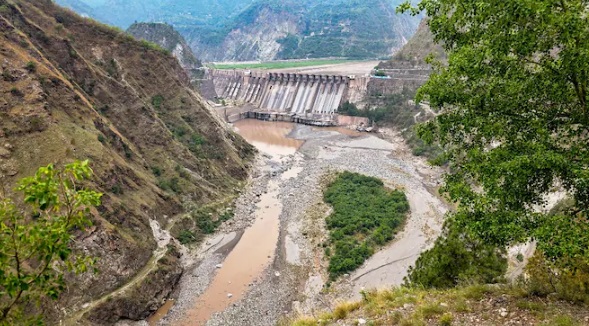
The Indus Water Treaty was signed after a decade of India’s Independence in 1960 by the then Government of India, led by Prime Minister Jawaharlal Nehru, and Pakistan’s Head of State, General Ayub Khan. The treaty, facilitated by the World Bank, allows lower riparian state Pakistan to use the waters of the western rivers of the Indus River System, and emerged as one of the most successful water-sharing treaties in the world. Pakistan’s agriculture and power generation depend heavily on the waters of the Indus system.