NEW DELHI : In June 1985, Dhirubhai Ambani laughed at those who had earlier predicted that Reliance was a bubble waiting to burst. “I am the bubble that burst,” Dhirubhai Ambani told India Today Magazine.
By then, the textile manufacturer who had challenged India’s established industrial houses had transformed the fortunes of ordinary shareholders. An investment of Rs 1,000 in Reliance’s 1977 initial public offering (IPO) was worth over Rs 50,000 by 1985, apart from thousands of rupees in dividends. Those who invested Rs 2,000 and earned comparable returns could have become lakhpatis in less than eight years. Before today’s arabpati or crorepati, being lakhpati was a dream for ordinary Indians.
Dhirubhai Ambani, who built a business empire from humble beginnings, also helped ordinary middle-class Indians by introducing them to the wealth-creating potential of shares. By 1993, Reliance Industries had become India’s largest company by sales.
Nearly five decades later, Reliance is adding another defining chapter in its stock-market history.

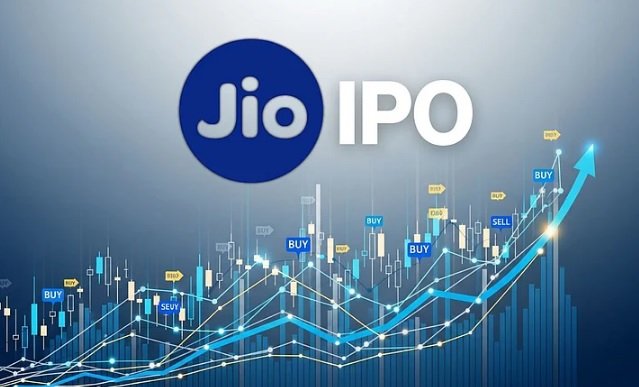
Jio Platforms, the digital and telecom arm of Mukesh Ambani-led Reliance Industries, and headed by Managing Director Akash Ambani, opened its Rs 30,213-crore initial public offering (IPO) on Wednesday. The offering is set to become India’s largest-ever IPO, surpassing Hyundai Motor India’s Rs 27,870-crore issue in 2024. Mukesh Ambani’s son Akash Ambani is the Managing Director of Jio Platforms and Chairman of Reliance Jio Infocomm, its telecom subsidiary.
Now, nearly five decades after the first IPO of Reliance Textile Industries (now Reliance Industries Limited or RIL) in 1977, its public offerings have grown enormously in size and scale, while its businesses have expanded from textiles to petrochemicals, energy, retail and telecommunications.
Jio Platforms’ IPO was fully subscribed within just 100 minutes of opening on Wednesday. It was the fastest among India’s mega public issues.
As of 1 PM on October 21, the grey market premium (GMP) of the Jio Platforms IPO stood at Rs 253. At the upper price band of Rs 1,119 per share, this indicates an estimated listing price of Rs 1,372, or a potential gain of around 23%.
Before Jio became a telecom giant, Dhirubhai Ambani had made Reliance a household name and its shares a prized possession for ordinary Indians. The story of Jio’s mega IPO goes back to November 1977, when Dhirubhai raised around Rs 2.8 crore by taking Reliance Textile Industries public.
HOW DHIRUBHAI BROUGHT THE MIDDLE CLASS TO THE STOCK MARKET
Reliance Textile Industries, as the company was named until 1985, raised approximately Rs 2.8 crore through its November 1977 public issue. Around 58,000 investors participated, and the offering was subscribed seven times, according to Reliance’s historical disclosures cited in news reports.
At the time, India’s stock market was a much smaller world. The Bombay Stock Exchange (BSE) benchmark Sensex, launched on January 1, 1986, used the fiscal year 1978–79 as its base year, assigning it a base value of 100 points. Today, the BSE Sensex is at over 73,500 points at the time of filing the report.
Equity investment was largely associated with brokers, wealthy families and experienced participants of the share bazaar. Dhirubhai Ambani saw an opportunity to bring ordinary Indian savers into that world.
He had built Reliance around textiles, particularly the Vimal brand, and needed capital to finance expansion of the company. Instead of depending entirely on traditional financing channels, he reached out to the investing public. The relationship he cultivated with shareholders became one of Reliance’s defining characteristics.
Shareholder meetings in parks and fields turned into large public gatherings. Dhirubhai Ambani addressed the investors. India Today’s June 30, 1985, cover story carried a photograph of Ambani addressing 12,000 shareholders at the Cooperage Football Ground in Bombay (now Mumbai) at Reliance’s Annual General Meeting.
His appeal was bigger than that Reliance would pay them dividends. Investors were encouraged to see themselves as participants in the company’s expansion.
THE STOCK MARKET BATTLE THAT MADE RELIANCE A LEGEND
Reliance’s spectacular rise was not without controversy. Dhirubhai Ambani faced allegations of stock-market manipulation. He was involved in battles with rival business houses. And, he also faced questions over his company’s political connections and advantages with regulatory bodies.
In May 1982, India Today Magazine journalist Chander Uday Singh documented a confrontation betwen Reliance supporters and bear operators attempting to drive down the company’s share price. Bear operators are stock-market traders who bet on share prices falling, often by selling shares they do not own in the hope of buying them back later at a lower price and pocketing the difference.
The report described a stock-market battle involving large-scale selling and an effort by buyers supporting Reliance shares to withstand the pressure. The episode helped establish Dhirubhai Ambani’s reputation as a formidable operator in India’s financial markets.
But it also exposed how the fortunes of Reliance shareholders had become intertwined with the company’s battles in the stock market.
By June 1985, when India Today Magazine published its cover story on Dhirubhai Ambani, Reliance had become one of the country’s most closely watched corporate success stories. Reliance’s public issues between 1977 and 1985 helped create a mass culture of equity investment.
HOW RS 1,000 IN RELIANCE’S SHARES BECAME RS 50,000
The extraordinary returns that turned modest investments in Reliance shares into fortunes were documented by India Today Magazine journalists TN Ninan and Jagannath Dubashi in the June 30, 1985, issue. They examined how Dhirubhai Ambani’s company had emerged as a remarkable wealth creator for ordinary Indian shareholders.
In their report, the journalists calculated that anyone who had invested Rs 1,000 when Reliance first offered shares to the public less than eight years earlier had received Rs 3,937 in dividends alone. The market value of that investment had crossed Rs 50,000.
An investment of Rs 1,000 in Reliance IPO in 1977 would be Rs 3,117 in 2026 purchasing power, after adjusting for inflation. The Rs 1,000 had grown to over Rs 50,000 by 1985, in just eight years, equivalent to more than Rs 8.1 lakh in 2026 purchasing power, after adjusting for inflation.
That meant the shares were worth more than 50 times the original investment, without counting the dividends. A dividend is a portion of a company’s profits distributed to its shareholders, usually as cash, as a reward for owning its shares.
For someone who had invested Rs 2,000 and held on to the shares, the corresponding market value would have exceeded Rs 1 lakh. A Rs 10,000 investment would have grown to more than Rs 5 lakh.
But the success was not without setbacks. In 1986, Reliance Securities crashed following a government decision affecting the company’s debenture-conversion plans. The move wiped out up to Rs 300 crore in the market wealth of around 15 lakh investors within hours. The crash exposed the risks behind Dhirubhai Ambani’s equity revolution.
However, the enthusiasm to invest in the share market extended beyond Reliance. Investors flocked to shares of other major companies such as Dunlop, Brooke Bond, Ceat and Lipton, whose prices rose by more than 50% in just six weeks in early 1986. The equity boom was so intense that 110 companies launched IPOs on a single day, India Today Magazine reported in February 1986.