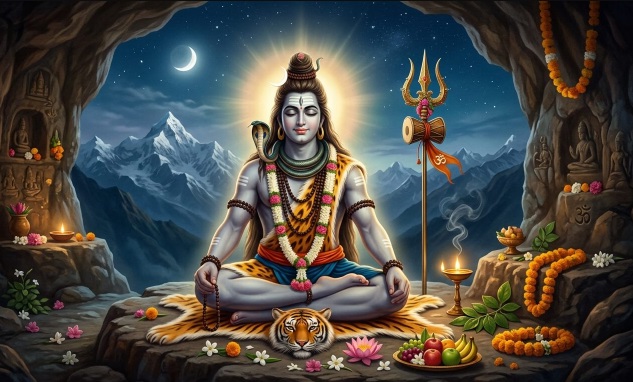
NEW DELHI : The month of Sawan is dedicated to Lord Shiva. This sacred period begins on the Pratipada Tithi of Krishna Paksha in the month of Shravan. In many parts of India, the annual Shravani fairs also begin on this day and continue throughout the month.
During Sawan, devotees of Lord Shiva offer special prayers, take part in the Kanwar Yatra, and perform abhishek of the Shivling with Ganga jal or water from another sacred river. They pray for fulfilment of their wishes. In some regions, the Kanwar Yatra continues until Sawan Shivratri, while in others it lasts throughout the month. The Sawan Monday fasts, known as Somwar Vrat, are important. Unmarried women observe Somwar Vrat to get a good husband.
When Does Sawan 2026 Begin?
According to the Hindu calendar, Sawan will officially begin on 30 July 2026.
How Long Will Sawan Last?
This year, Sawan will last for 31 days. It will begin on 30 July and will end on 28 August. That day will also observed as Shravan Purnima. The Purnima Tithi will begin at 9:08 am on 27 August and end at 9:48 am on 28 August. Raksha Bandhan will also be celebrated on the same day.

Sawan Monday Fasts 2026
There will be four Sawan Mondays in 2026:
- First Sawan Monday: 3 August
- Second Sawan Monday: 10 August
- Third Sawan Monday: 17 August
- Fourth Sawan Monday: 24 August
Each of these Mondays is also associated with auspicious yogas, adding to the spiritual importance of observing the fast.
Why Do Sawan Dates Differ Between North and South India?
The difference in the start of Sawan across North and South India comes down to the method used to calculate the Hindu calendar.
“There is fifteen days difference in starting time of Shravan month depending on the followed lunar calendar in the region. In Purnimanta calendar, usually followed by North Indian states, Shravan month starts fifteen days before Amanta calendar,” states Drik Panchang.
Adding, “In Andhra Pradesh, Telangana, Goa, Maharashtra, Gujarat, Karnataka and Tamil Nadu, Amanta Lunar Calendar is followed while in North Indian states Rajasthan, Uttar Pradesh, Madhya Pradesh, Punjab, Himachal Pradesh, Uttarakhand, Chhattisgarh, Bihar and Jharkhand Purnimanta Calendar is followed. Hence half of the Sawan Somwar dates differ in both calendars.”
Interestingly, Solar Calendar is followed in Nepal and part of Himachal Pradesh and Uttarakhand. Hence, the dates followed by them will be different from Amanta as well as Purnimanta calendar.
Religious Significance of Sawan
According to Hindu mythology, the significance of Sawan is closely linked to the story of the Samudra Manthan, or the Churning of the Ocean. During the churning, the deadly poison halahala emerged first, threatening the entire universe. To save creation, Lord Shiva consumed the poison and held it in his throat, earning the name Neelkanth.
The poison generated intense heat within his body, and to cool him, the gods offered water. Hence the ritual of jalabhishek is said to have been observed, by poring water on Shivling during Sawan.
It is believed that worshipping Lord Shiva with sincere devotion throughout this sacred month pleases him and brings blessings, fulfilling the wishes of his devotees.