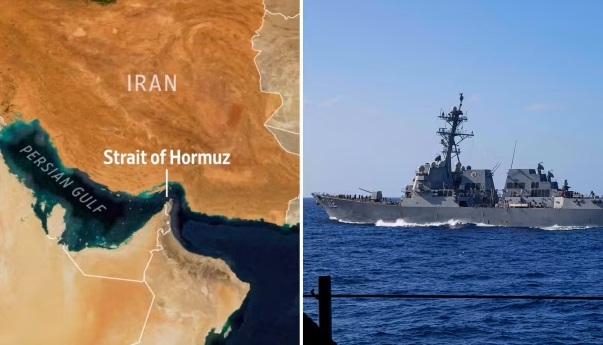
New Delhi :Iran is set to introduce a new system for regulating maritime movement through the Strait of Hormuz, with officials saying only countries and commercial operators cooperating with Tehran will be permitted access under the arrangement.
Ebrahim Azizi, who chairs the Iranian parliament’s national security and foreign policy committee, said Tehran has already prepared “a professional mechanism to manage traffic” through the strategic waterway and that the framework would be announced soon.
“In this process, only commercial vessels and parties cooperating with Iran will benefit from it,” Azizi said, adding that “the necessary fees will be collected for specialized services”.
According to AFP, Iranian state television reported on Saturday that several European nations had opened discussions with Tehran regarding ship transit through the strait. The report said negotiations were taking place with the navy of Iran’s Revolutionary Guards.

“Following the passage of ships from East Asian countries, notably China, Japan and Pakistan, we received information today indicating that Europeans have also begun negotiations with the Revolutionary Guards navy” to secure permission for passage, state television said, without identifying the countries involved.
Shipping through the Strait of Hormuz has remained heavily restricted since fighting erupted between Iran, the United States and Israel on February 28. Although a ceasefire took effect on April 8, Iran has maintained tight control over vessel movement in the channel, a critical artery for global energy supplies.
The restrictions have unsettled international markets, with the strait traditionally carrying nearly one-fifth of the world’s oil and liquefied natural gas shipments, along with other traded commodities.
Iran recently permitted dozens of vessels, including ships from China, to cross the passage after what the Revolutionary Guards described as “an agreement on Iran’s strait management protocols”.
Tehran has repeatedly insisted that shipping activity in the strait would “not return to its pre-war status”. Last month, Iranian authorities also said they had received initial income generated from tolls imposed on maritime traffic using the route.
Azizi further stated that the passage would remain inaccessible to participants in the so-called “freedom project”, referring to a temporary US-led military effort aimed at escorting stranded commercial vessels through the waterway.