New Delhi : Just a few months ago, the United States imposed a steep 50% tariff on several Indian products, delivering a major blow to Indian exporters. The move prompted policymakers in New Delhi to confront an uncomfortable reality — that America, with its unpredictable trade policies and shifting priorities, cannot always be counted on as a dependable economic partner. Simultaneously, China’s abrupt suspension of critical mineral supplies to India created fresh bottlenecks for several domestic industries, underscoring the risks of overreliance on any single global partner.
In response, India has begun recalibrating its economic strategy — one that emphasizes self-reliance, export diversification, and resource security. The recent policy push through the Export Promotion Mission and the revision of royalty rates for critical minerals mark a decisive step in that direction.
Export Promotion Mission
The Union Cabinet, chaired by Prime Minister Narendra Modi, has approved the Export Promotion Mission (EPM) — a flagship initiative announced in the Union Budget 2025–26 aimed at boosting India’s export competitiveness, especially for MSMEs, first-time exporters, and labour-intensive sectors.
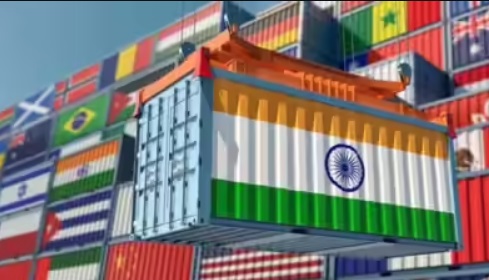
With an outlay of Rs 25,060 crore for the period 2025–26 to 2030–31, EPM seeks to unify various fragmented export schemes into a single, outcome-driven framework. The Mission will be digitally powered, flexible, and responsive to evolving global trade conditions, enabling faster adaptation to tariff escalations and supply chain disruptions.
EPM’s collaborative structure brings together the Department of Commerce, Ministry of MSME, Ministry of Finance, and other key agencies, alongside financial institutions, Export Promotion Councils, industry associations, and state governments. Priority assistance will be directed toward sectors most affected by recent global tariffs, including textiles, leather, gems & jewellery, engineering goods, and marine products. By sustaining export orders and protecting employment, EPM also aims to diversify India’s export basket and market reach.
Critical Minerals
In another major decision, the Union Cabinet has approved the revision of royalty rates for key critical minerals — caesium, graphite, rubidium, and zirconium. This move is expected to accelerate the auction of mineral blocks containing these elements, thereby unlocking access to valuable associated minerals such as lithium, tungsten, rare earth elements (REEs), and niobium.
The new ad valorem royalty rate for graphite ensures that revenue from mining reflects actual market prices across different grades. More importantly, the step is expected to spur indigenous production, reduce import dependency, and create employment opportunities, all while strengthening India’s industrial and technological base.
These minerals play an essential role in high-tech manufacturing and the global energy transition. Graphite and zirconium, notably, feature among the 24 critical and strategic minerals listed under the Mines and Minerals (Development and Regulation) Act, 1957 (MMDR Act).
National Critical Mineral Mission
As the world transitions to clean energy and advanced technologies, control over critical minerals has become the new axis of global competition. Recognizing this, India launched the National Critical Mineral Mission (NCMM) in January 2025, with a total expenditure of Rs 16,300 crore and an additional Rs 18,000 crore in expected investments from PSUs and private partners.
Far beyond a mining initiative, NCMM serves as a strategic roadmap to secure mineral supply chains, ensure energy independence, and bolster industrial resilience. It covers every stage — from exploration and extraction to processing, recycling, R&D, and human capital development. The Mission is anchored in the amended MMDR Act, granting the central government the exclusive authority to auction 24 of 30 identified critical minerals.
India’s Strategic Pivot
Through the Export Promotion Mission and the renewed focus on critical minerals, India is sending a clear signal — it is no longer willing to be a passive player in global trade shaped by the whims of larger economies. By diversifying export markets and building domestic capacity in essential resources, the country is charting a new economic doctrine grounded in resilience, innovation, and strategic autonomy.
In a world defined by protectionism and supply chain fragility, India’s emerging approach reflects a confident shift — from dependence to dominance, and from reactive trade policy to proactive global leadership.