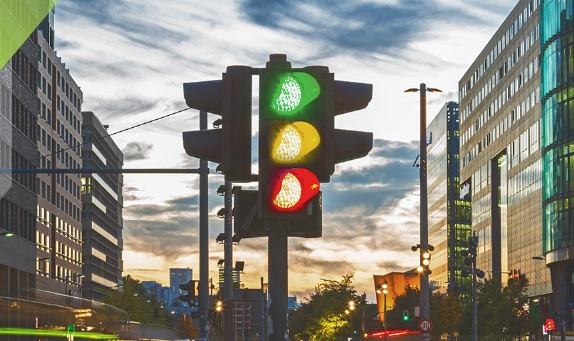
New Delhi : If you stop at a traffic signal, you will always see the same three colours — red, yellow and green. While modern technology has transformed vehicles and roads, traffic lights across the world still rely on these three colours. The reason lies in science, safety, and history
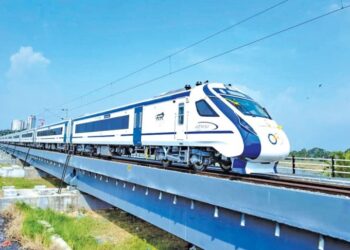
The use of red, yellow and green dates back to the 19th century railway systems. Early railways used coloured signals to manage train movement and avoid collisions. Red was chosen to mean ‘stop’ because it was already associated with danger and warnings. Green meant ‘go’, while yellow was used as a cautionary signal between stop and go.
When traffic lights were later introduced for road vehicles in the early 20th century, engineers adopted the same colour system because it was already familiar and proven effective.
Why Red Means Stop?
Red has the longest wavelength among visible colours, which makes it easier to see from a distance, even in fog, rain, or dust. This visibility is crucial for warning drivers to stop in time. Psychologically, red is also linked with danger and urgency, making it an effective signal for halting traffic.
Yellow Signals Caution
Yellow, also known as amber, acts as a warning colour. It tells drivers that the signal is about to change. Yellow is bright and highly noticeable, giving drivers enough time to slow down or prepare to stop. It reduces sudden braking and helps prevent accidents at intersections.
Green Allows Movement
Green is easy on the eyes and clearly visible in daylight and at night. It signals safety and permission to move forward. Since green has a calming effect, it helps traffic flow smoothly without causing panic or confusion among drivers.
Scientific and Human Factors
The three-colour system also considers human reaction time and colour recognition. Most people, including those with mild colour vision deficiencies, can distinguish red, yellow and green when they are placed in a fixed order. Their consistent vertical or horizontal arrangement further reduces confusion.
A Global Standard
Today, almost every country follows this three-colour traffic light system. International road safety agreements and vehicle design standards are built around it. Changing the colours would require massive infrastructure changes and retraining drivers worldwide.
Despite advances in smart traffic systems, red, yellow and green remain the most reliable combination for controlling road traffic.