New Delhi : India’s flight network is under heavy pressure as new Flight Duty Time Limitation norms collide with IndiGo’s tight schedules, triggering more than 1,500 cancellations in four days, widespread delays, airport crowding, emergency relaxations by the DGCA and renewed focus on how FDTL rules shape safety, fatigue and airline planning.
While many travellers first saw the term FDTL on cancellation notices, the concept sits at the core of crew safety policy, setting maximum duty hours, minimum rest and night workload limits for pilots and cabin crew, and recent rule changes have altered these boundaries just as winter schedules, aircraft snags and staff shortages squeezed IndiGo’s high-frequency operations.
What is FDTL? and how pilot duty, rest and night limits are defined
Flight Duty Time Limitation norms specify how long crew can remain on duty from reporting until sign-off, how many hours they may actually fly during that window, how many night landings are allowed and the mandatory rest gap that must follow, forming part of the DGCA’s safety framework and reflecting wider international fatigue-control practices.
Earlier, India’s 2019 FDTL structure gave airlines greater flexibility, especially for late-night networks, with pilots entitled to a minimum weekly rest of 36 hours including two local nights, a night period defined from 00:00 to 05:00, any duty overlapping that window treated as night work and up to six night landings allowed in a single duty period.
FDTL norms: previous duty limits versus new stricter fatigue controls
Under that older regime, day flying could last around 10 hours with total duty stretching close to 13 hours, and similar ranges applied overnight, allowing dense banks of red-eye services but leaving limited buffer against fatigue when long duty periods, multiple sectors and several landings combined within the same shift.
The DGCA’s January 2024 overhaul of FDTL norms aimed to counter these stress points by tightening rest, expanding the night window, restricting night-sector workload and introducing new fatigue-reporting duties, with full implementation initially planned for late 2025 but later shifted to a phased rollout under legal and operational pressure.
FDTL norms: detailed rule changes now affecting all airlines
The revised FDTL package, notified on 31 May 2024, raised minimum weekly rest to 48 consecutive hours instead of 36, increased the official night period to 00:00–06:00, cut permitted night landings in one duty from six to two, limited overnight flight time to eight hours, capped night duty at 10 hours and generally allowed only two consecutive night duties before extra rest.
Additional provisions required airlines to adjust rosters when fatigue risks appeared, record fatigue data and submit quarterly reports, and encouraged more advanced fatigue risk management tools, while the implementation schedule, pushed by operational concerns, moved to a staged programme starting 1 July 2025 and finishing 1 November 2025 after direction from the Delhi High Court to enforce the updated framework.
FDTL norms and why regulators insisted on tighter fatigue rules
Regulatory analysis showed that long duty periods, intensive night operations and many landings within a single shift were key fatigue drivers, and pilot groups argued that India’s earlier FDTL standards were looser than several foreign benchmarks, so the DGCA sought to align domestic practice more closely with global safety evidence while insisting that adequate recovery time must sit at the centre of flight scheduling.
As these stricter FDTL rules took full effect from November 2025, they coincided with the winter timetable, a pre-existing pilot crunch and technical advisories affecting some aircraft, creating a systemic squeeze on crew availability that hit IndiGo hardest because of the airline’s large scale, high utilisation strategy and extensive overnight and early-morning flying programme.
FDTL norms and the immediate impact on IndiGo operations
The shift to the new FDTL norms forced many IndiGo pilots into longer mandatory rest just as the airline raised frequencies for its winter schedule from 26 October, and an Airbus A320 software advisory then caused weekend disruptions that pushed many services past midnight into the extended night window, triggering more rest requirements, cutting available crew and driving further cancellations.
DGCA figures show that in November 2025 IndiGo logged 1,232 cancellations, of which 755 were attributed to crew and FDTL-related constraints, 258 to airspace or airport restrictions, 92 to air traffic control system failures and 127 to other causes, while the carrier’s on-time performance slid from 84.1 per cent in October to 67.7 per cent in November before dropping further in early December.
FDTL norms, DGCA relaxations and special relief for IndiGo
As IndiGo’s disruption deepened, with the airline cancelling more than 1,500 flights in four days and over 600 on a single Friday, the DGCA issued a special order granting IndiGo a one-time exemption from two specific FDTL clauses, Para 3.11 covering the 00:00–05:00 night duty window and Para 6.1.4 concerning operations encroaching into night duty, after IndiGo said these provisions were sharply constraining crew availability under Phase-II rules.
The regulator stressed that this FDTL relaxation is strictly temporary and aimed only at stabilising operations, effective immediately until 10 February 2026, subject to review every 15 days, and IndiGo must file fortnightly progress records detailing actual crew utilisation, measures to improve availability and steps taken in roster planning to restore normal network performance.
FDTL norms: wider relief measures for all Indian airlines
In a separate order affecting every carrier, the DGCA suspended its instruction that had previously stopped airlines from substituting weekly rest with accumulated leave, after operators said that restriction made it harder to construct rosters during the present turbulence, and the regulator said this broader FDTL-related relaxation was issued “in view of the ongoing operational disruptions and representations received from various airlines” with approval of the Competent Authority.
The DGCA simultaneously appealed to pilot associations for cooperation as the system faced winter fog and holiday peaks, urging pilots to assist in stabilising operations and avoiding unnecessary delays while stressing that FDTL regulations would still be enforced “in letter and spirit,” signalling that safety margins on fatigue would not be rolled back despite short-term dispensations.
FDTL norms and the scale of IndiGo’s cancellations mapped by airports
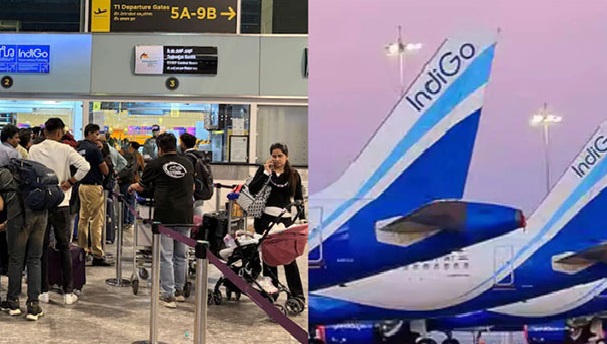
IndiGo normally flies more than 2,200 services each day, nearly twice Air India’s daily operations, meaning any FDTL-related roster disruption can cascade rapidly, and on one Friday Delhi Airport cancelled 135 IndiGo departures and 90 arrivals, Bengaluru recorded 52 cancelled arrivals plus 50 departures, Hyderabad saw 92 cancellations and Mumbai logged 104 scrubbed services, as airports struggled with queuing passengers and reshuffled stands.
According to DGCA and airport reports, domestic departures by IndiGo were temporarily halted at Delhi until midnight to prevent terminal overcrowding, Chennai stopped IndiGo take-offs until 6 pm the same day, and airports in Bengaluru and Hyderabad also reported strain as the carrier’s schedule buckled, with more than 1,300 cancellations nationwide in just 48 hours, reflecting how quickly network disruption spread.
FDTL norms, passenger experience and fatigue-safety expectations
Many travellers reported long waits and limited communication during the FDTL-driven disruption, including one passenger in Hyderabad who said, “They kept saying ‘just two more hours’ for 12 hours straight. No hotel, no food, nothing,” while another from Bengaluru described waiting more than 12 hours overnight before being told the flight would not operate.
From a passenger perspective, analysts expect that stricter FDTL norms will gradually reduce very late-night and very early-morning departures, as airlines adjust networks around the extended night window and new limits on night landings, and fleets may need more pilots or thinner schedules to maintain reliability while keeping fatigue at safer levels over time.
FDTL norms: IndiGo’s explanation and mitigation steps for customers
IndiGo attributed the disruption to “a multitude of unforeseen operational challenges,” including smaller technology issues, congestion, weather and winter schedule changes, and in a public statement on Friday the airline called the situation a “serious operational crisis” and said it was doing “everything in our capacity” to stabilise flights and bring schedules back to normal “at the earliest.”
The same IndiGo statement noted that the day of issue would likely see the highest cancellations, framed as necessary to “reboot all our systems and schedules for progressive improvement starting tomorrow,” and said short-term proactive cancellations were being made “to ease operations” and decongest terminals while teams worked with the Ministry and DGCA to restore regular flying.
FDTL norms and IndiGo’s support measures summarised in data form
For affected customers, IndiGo announced automatic refunds to the original payment method for cancelled flights, a full waiver on cancellation or rescheduling charges for travel between 5 December 2025 and 15 December 2025, thousands of hotel rooms and surface transport options in different cities, food and snacks at airports and lounge access for senior citizens wherever available, alongside digital support through its AI assistant 6Eskai.
The airline also appealed for patience, asked passengers to check flight status before leaving home, avoid going to the airport when flights were cancelled, and said it had “massively increased” its contact-centre capacity to cut hold times, ending the message with a promise that customers would “see incremental progress,” and the assurance, “We will do everything to earn back your trust and the love you have showered on us in the last 19 years.”