Touch with World
Sunday, October 18, 2026
  • Home
  • India
    • Uttar Pradesh
    • Haryana
    • Uttarakhand
    • Punjab
    • Rajsthan
    • Bihar
    • North India
    • South India
  • NCR
    • Delhi
    • Noida
    • Gaziabad
    • Gurugram
    • Faridabad
  • World
  • Politics
  • Economy
    • Business
    • Markets
    • Cryptocurrency
    • Startup
    • Real Estate
  • Crime
  • Opinion
    • Interview
  • Religion
    • Spirituality
    • Dharma
    • Astrology
    • horoscope
  • Education
    • campus
  • Health
    • Yoga
    • Aayurveda
    • Fitness
  • Sports
  • Page3
    • Bollywood
    • Hollywood
    • Fashion
  • E Paper
Touch with World
  • Home
  • India
    • Uttar Pradesh
    • Haryana
    • Uttarakhand
    • Punjab
    • Rajsthan
    • Bihar
    • North India
    • South India
  • NCR
    • Delhi
    • Noida
    • Gaziabad
    • Gurugram
    • Faridabad
  • World
  • Politics
  • Economy
    • Business
    • Markets
    • Cryptocurrency
    • Startup
    • Real Estate
  • Crime
  • Opinion
    • Interview
  • Religion
    • Spirituality
    • Dharma
    • Astrology
    • horoscope
  • Education
    • campus
  • Health
    • Yoga
    • Aayurveda
    • Fitness
  • Sports
  • Page3
    • Bollywood
    • Hollywood
    • Fashion
  • E Paper
No Result
View All Result
Touch with World
Home Health

Does food order matter? Eating olive oil before carbs may reduce blood sugar spikes, study suggests

by Touch With World
October 14, 2026
in Health
342
0
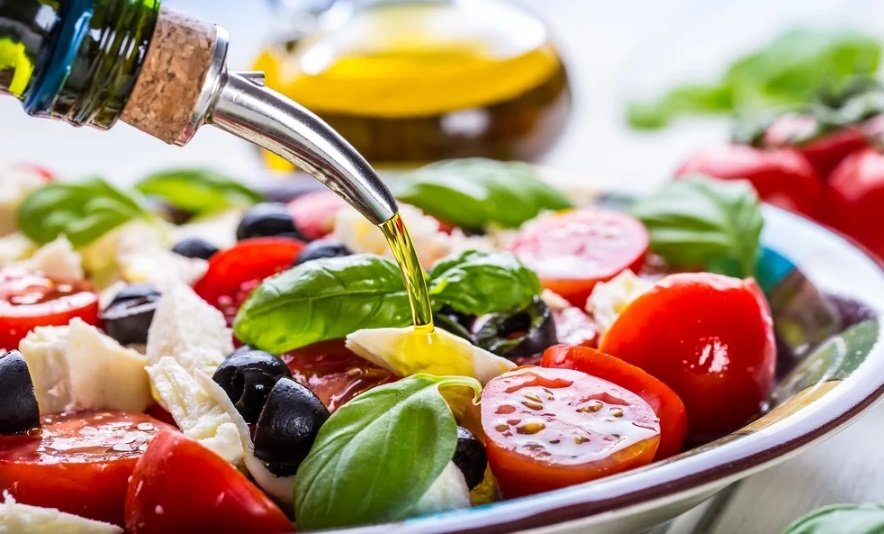
eating olive oil
115
SHARES
1.6k
VIEWS
Share on WhatsappShare on FacebookShare on X

New Delhi: What if managing blood sugar spikes after a meal depended not only on what you eat but also on the order in which you eat it? New research suggests that consuming fat before carbohydrates may slow the rise in blood glucose after eating, offering scientists fresh clues about why meal sequencing could matter for metabolic health.

Previous clinical studies have indicated that eating vegetables, protein or fat before carbohydrates may help reduce the sharp rise in blood sugar that can occur after a meal. But exactly what happens inside the body to produce this effect has not been fully understood.

Researchers from an international team have now investigated the biological mechanisms behind the phenomenon, focusing on how the timing of fat consumption affects blood glucose, digestion and hormones involved in regulating metabolism. The study was conducted in mice, meaning the findings cannot yet be directly applied to humans.

Why does the order of food matter?
Post-meal blood sugar is an important consideration in diabetes management. A meal rich in carbohydrates can cause glucose levels to rise as carbohydrates are digested and glucose enters the bloodstream. One strategy researchers have been exploring is changing the sequence in which different nutrients are consumed.

“Meal-sequencing is appealing because it merely changes how a meal is eaten rather than requiring people to avoid entire food groups,” corresponding author Daisuke Yabe of Kyoto University said. Scientists have previously suggested that eating certain foods before carbohydrates could slow the rate at which food leaves the stomach. It may also stimulate hormones such as GLP-1, which plays an important role in blood sugar regulation.

The new research looked more closely at the interaction between these hormones and the nervous system.

What did the researchers do?
In their experiments, the researchers randomly divided mice that had fasted overnight into groups. One group got water and then glucose. One group was given olive oil and glucose after 15 min, the second group was given glucose and olive oil after 15 min, and the third group was given glucose and olive oil after 15 min.

Then the scientists measured a number of markers including blood glucose, insulin, glucagon, GIP and GLP-1. They also examined gastric emptying, or how fast the stomach empties its contents into the intestine.

Other groups of researchers repeated the experiments in mice with type 2 diabetes and in mice lacking GLP-1 receptors. Further experiments blocked different hormone signals and investigated the role of the vagus nerve. Other dietary fats were also tested to determine whether the findings were limited to olive oil.

Eating fat before glucose changed the blood sugar response
The researchers found that giving mice olive oil before glucose resulted in a smaller early rise in blood sugar compared with giving glucose before the oil. The olive oil preload also slowed gastric emptying. This could mean glucose reaches the intestine more gradually instead of being delivered quickly.

Consuming fat before glucose also triggered an early increase in three hormones: glucagon, GIP and GLP-1. The effects were also seen in mice with type 2 diabetes and severe insulin deficiency.

Glucagon may have a surprising role
One particularly interesting finding involved glucagon. The hormone is generally known for its ability to increase blood glucose. However, the experiments suggested that glucagon may also play a role in the glucose-lowering response produced when fat is consumed before glucose.

Blocking glucagon signalling alone or GLP-1 signalling alone did not eliminate the blood sugar-lowering effect of the olive oil preload. However, when researchers inhibited both pathways together, the effect was weakened. This suggests that the two hormone systems may work together as part of the body’s response to nutrient order.

Experiments involving the vagus nerve also indicated that communication between the gut and nervous system could contribute to the effect. “Our findings suggest that the order in which nutrients reach the gut can engage a coordinated hormone-nerve response that changes how quickly the stomach delivers glucose to the intestine,” Yabe said.

Should you start having olive oil before carbohydrates?
The findings should not be interpreted as a recommendation to drink olive oil before meals. This was an animal study designed primarily to understand the biological mechanisms behind meal sequencing. Whether the same hormone and nerve responses occur to the same extent in humans requires further investigation.

The research nevertheless provides a possible physiological explanation for observations from earlier clinical studies suggesting that nutrient order can influence post-meal glucose levels.

If future human studies confirm the findings, meal sequencing could prove useful because it does not necessarily require eliminating carbohydrates or other food groups. Instead, it could involve changing the order in which different parts of a meal are eaten.
 

Related Posts

Low-Fat Vegan Eating
Health

Low-Fat Vegan Eating: A Sustainable Path To Weight Loss, Say Researchers

October 17, 2026
1.6k
Supreme court
Health

Why Supreme Court has sought review of pharma freebie rules, their stricter enforcement

October 15, 2026
1.6k
Can 7 Minutes Of Meditation Make A Difference? What New Research Reveals
Health

Can 7 Minutes Of Meditation Make A Difference? What New Research Reveals

October 11, 2026
1.6k
dry skin
Health

How To Repair Skin Barrier From Pollution Damage?

October 10, 2026
1.6k
Fasting
Health

Fasting as seasons change: what’s risky, and why detox is a myth

October 8, 2026
1.6k
WHO
Health

No Weight-loss Surgery Or Devices: WHO Issues First Global Guidelines On Child And Adolescent Obesity

October 7, 2026
1.6k
real estate growth markets

Beyond Gurugram and Noida: Why Faridabad could be NCR’s next real estate growth market

October 17, 2026
Low-Fat Vegan Eating

Low-Fat Vegan Eating: A Sustainable Path To Weight Loss, Say Researchers

October 17, 2026
ramayan

Ranbir Kapoor, Yash’s Ramayana To Have 300 Prepaid Previews: Report

October 17, 2026

Recent News

real estate growth markets

Beyond Gurugram and Noida: Why Faridabad could be NCR’s next real estate growth market

October 17, 2026
Low-Fat Vegan Eating

Low-Fat Vegan Eating: A Sustainable Path To Weight Loss, Say Researchers

October 17, 2026

Categories

  • Aayurveda
  • Astrology
  • Bihar
  • Bollywood
  • Business
  • campus
  • Crime
  • Delhi
  • Dharma
  • Economy
  • Education
  • Entertainment
  • Fashion
  • Fitness
  • Gadget
  • Gaziabad
  • Health
  • Hollywood
  • horoscope
  • India
  • International
  • lifestyle
  • main story
  • Markets
  • National
  • NCR
  • Noida
  • North India
  • Politics
  • Punjab
  • Rajsthan
  • Real Estate
  • Religion
  • South India
  • Spirituality
  • Sports
  • State
  • Tech
  • Uttar Pradesh
  • Uttarakhand
  • World
  • Yoga

Site Navigation

  • Home
  • Advertisement
  • Contact Us
  • Privacy & Policy
  • Other Links
Touch with World

Editor : Sachin Malik
Office add- A-45 Sector 69 Noida Gautam Buddha Nagar Uttar Pradesh
Email I'd- touchwithworld2007@gmail.com
info@touchwithworld.com

"Touch With World" is an English-language publication, reportedly established in 2010. Records indicate the publication is an English Monthly operating from Delhi. The Editor, Sachin Malik, would have played a key role in the publication's founding and continues to shape its editorial direction, catering to a readership interested in connecting with global and national developments. Check our landing page for details.

© 2025 Touch With World - India's Most Trusted News Era Touch With World.

No Result
View All Result
  • Home
  • India
    • Uttar Pradesh
    • Haryana
    • Uttarakhand
    • Punjab
    • Rajsthan
    • Bihar
    • North India
    • South India
  • NCR
    • Delhi
    • Noida
    • Gaziabad
    • Gurugram
    • Faridabad
  • World
  • Politics
  • Economy
    • Business
    • Markets
    • Cryptocurrency
    • Startup
    • Real Estate
  • Crime
  • Opinion
    • Interview
  • Religion
    • Spirituality
    • Dharma
    • Astrology
    • horoscope
  • Education
    • campus
  • Health
    • Yoga
    • Aayurveda
    • Fitness
  • Sports
  • Page3
    • Bollywood
    • Hollywood
    • Fashion
  • E Paper

© 2025 Touch With World - India's Most Trusted News Era Touch With World.

Welcome Back!

Login to your account below

Forgotten Password?

Retrieve your password

Please enter your username or email address to reset your password.

Log In