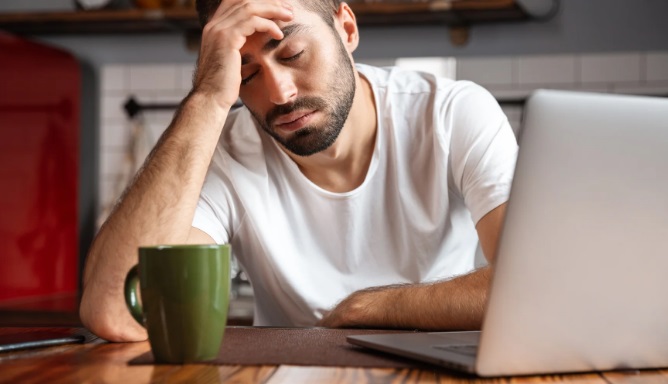
NEW DELHI : You go to bed at 11, wake up at 7 and tell yourself you have had a full night’s sleep. So why do you still feel as though your brain has not quite arrived? Most of us blame the alarm, work, stress, scrolling or simply “bad sleep”. But your perfectly innocent-looking cup of coffee may also deserve a little scrutiny.
A new review from researchers at Wroclaw Medical University has raised an interesting point about caffeine and sleep: coffee does not necessarily have to keep you awake to interfere with how restorative your sleep is. Researchers looking at EEG findings found that caffeine can reduce slow-wave activity, which is associated with deep sleep.
That is what makes the finding so relatable. You may not lie awake staring at the ceiling. You may fall asleep at your usual time, sleep for eight hours and remember no major disturbance, while your brain is nevertheless showing fewer of those deep-sleep patterns.
And this is not an argument to throw away your coffee mug. The researchers stress that caffeine affects people differently, depending on factors including dose, timing, age, metabolism, stress and individual sensitivity. The more useful question is perhaps not “Can I sleep after coffee?” but “Am I sleeping as well as I think I am?”

6 things to know if you drink coffee and still wake up tired
Falling asleep is not the whole story
You can fall asleep normally and remain in bed for eight hours while caffeine still changes the brain activity associated with deep sleep. Sleep duration alone does not tell the complete story.
Deep sleep matters
Slow-wave activity is a major feature of deep sleep, which is associated with physical recovery, energy restoration and healthy brain function. Reduced activity may therefore mean your sleep is less restorative.
You may not notice the disruption
This is perhaps the most frustrating part. You might not wake up repeatedly or struggle to fall asleep. The change can be subtle enough that you simply assume you had an ordinary night.
Your afternoon coffee counts too, timing matters
The review notes that, for some people, caffeine consumed earlier in the day may still affect sleep at night. How quickly your body processes caffeine varies considerably from person to person.
More tiredness can mean more coffee
Caffeine can make fatigue feel less noticeable during the day. But if it contributes to poorer nighttime recovery, a cycle can develop: tiredness, more stimulation, poorer sleep and then more tiredness.
Your coffee is not the villain
Caffeine cannot be simply called “good” or “bad”. Its effects depend on dose, time of day, lifestyle, stress, sleep quality and individual sensitivity. Your own pattern matters.
Hence, do not judge your sleep only by how quickly you fall asleep or how many hours you spend in bed. If you regularly wake tired despite apparently getting enough sleep, your entire daily routine, including when and how much caffeine you consume, may be worth examining.