Touch with World
Wednesday, May 27, 2026
  • Home
  • India
    • Uttar Pradesh
    • Haryana
    • Uttarakhand
    • Punjab
    • Rajsthan
    • Bihar
    • North India
    • South India
  • NCR
    • Delhi
    • Noida
    • Gaziabad
    • Gurugram
    • Faridabad
  • World
  • Politics
  • Economy
    • Business
    • Markets
    • Cryptocurrency
    • Startup
    • Real Estate
  • Crime
  • Opinion
    • Interview
  • Tech
    • Gadget
  • Religion
    • Spirituality
    • Dharma
    • Astrology
    • horoscope
  • Education
    • campus
  • Health
    • Yoga
    • Aayurveda
    • Fitness
  • Sports
  • Page3
    • Bollywood
    • Hollywood
    • Fashion
  • No Access
Touch with World
  • Home
  • India
    • Uttar Pradesh
    • Haryana
    • Uttarakhand
    • Punjab
    • Rajsthan
    • Bihar
    • North India
    • South India
  • NCR
    • Delhi
    • Noida
    • Gaziabad
    • Gurugram
    • Faridabad
  • World
  • Politics
  • Economy
    • Business
    • Markets
    • Cryptocurrency
    • Startup
    • Real Estate
  • Crime
  • Opinion
    • Interview
  • Tech
    • Gadget
  • Religion
    • Spirituality
    • Dharma
    • Astrology
    • horoscope
  • Education
    • campus
  • Health
    • Yoga
    • Aayurveda
    • Fitness
  • Sports
  • Page3
    • Bollywood
    • Hollywood
    • Fashion
  • No Access
No Result
View All Result
Touch with World
Home Religion

Char Dham Yatra: History and ancient origins

by Touch With World
April 25, 2026
in Religion, Spirituality
325
0
char dham
116
SHARES
1.7k
VIEWS
Share on WhatsappShare on FacebookShare on X

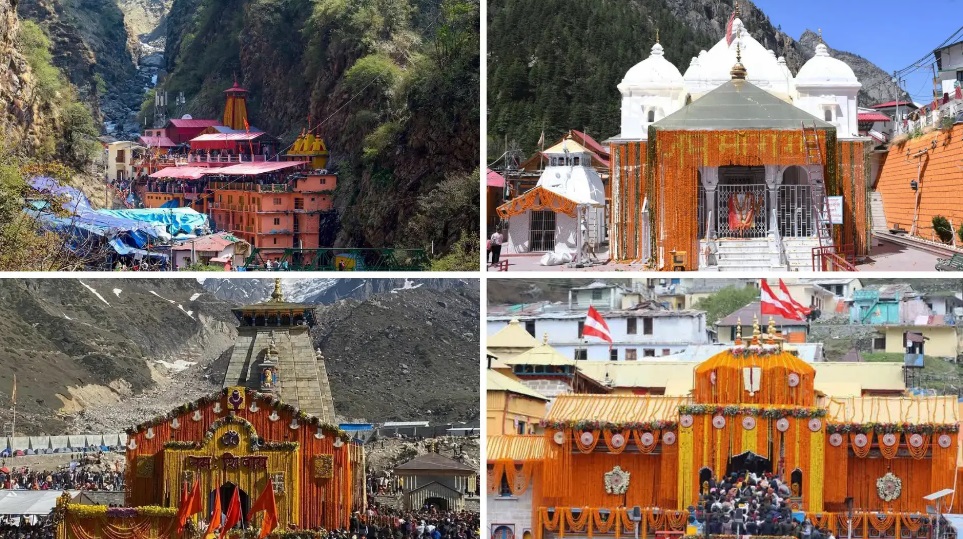
Dehradoon : Char Dham Yatra history holds a prominent place in Hindu culture as a spiritual journey to the four most sacred sites in the Garhwal Himalayas of Uttarakhand — Yamunotri, Gangotri, Kedarnath, and Badrinath. This pilgrimage is not only about faith but also carries a deep historical and cultural resonance that dates back centuries. It’s a profound journey that has inspired countless devotees, enriching India’s spiritual heritage.

The origins of the Char Dham Yatra are closely associated with Adi Shankaracharya, the influential 8th-century philosopher and theologian. He is credited with formalising the pilgrimage circuit to promote unity within Hinduism at a time when diverse beliefs and practices were spread across the subcontinent.

By linking these four distant shrines into a single spiritual route, he created a shared religious experience that transcended regional boundaries. His efforts not only strengthened religious cohesion but also ensured that the tradition would endure through generations.

The journey traditionally begins at Yamunotri, dedicated to Goddess Yamuna. The temple’s historical roots are linked to the 19th century, when it was constructed under the patronage of regional rulers. Its significance, however, lies far deeper, as it marks the origin of the Yamuna River, considered sacred in Hindu belief. Pilgrims are drawn to its thermal springs, especially Surya Kund, which have long been associated with purification rituals and spiritual healing.

Next in the sequence is Gangotri, the source of the River Ganga, one of the most sacred rivers in India. Mythological traditions recount how King Bhagirath undertook intense penance here to bring the river from the heavens to Earth, seeking salvation for his ancestors. The present-day temple was built in the early 18th century by a Gorkha commander, reflecting both devotion and historical patronage. Gangotri continues to embody themes of penance, redemption, and divine grace.

Kedarnath, dedicated to Lord Shiva, stands among the most ancient and revered pilgrimage destinations in India. Recognised as one of the twelve Jyotirlingas, it carries immense spiritual importance. Historical narratives suggest that the temple dates back over a millennium, with connections to the Pandavas of the Mahabharata and later restoration efforts attributed to Adi Shankaracharya. Situated at an altitude of over 3,500 metres, the temple is a testament to remarkable ancient construction in a challenging mountainous environment. The nearby samadhi of Shankaracharya further reinforces its religious significance.

Badrinath, devoted to Lord Vishnu, is often regarded as the most prominent among the four shrines. Ancient scriptures, including the Puranas, contain references to its sanctity, underscoring its long-standing importance in Hindu tradition. Adi Shankaracharya is believed to have revived this shrine during the early medieval period, establishing it as a key centre of Vaishnavite worship. Located along the banks of the Alaknanda River and surrounded by the Nar and Narayan mountain ranges, Badrinath is widely seen as a place of spiritual peace and contemplation.

The influence of Adi Shankaracharya on the Char Dham Yatra extends beyond its physical establishment. His philosophical teachings and devotional compositions helped shape the spiritual framework associated with these shrines. Through his travels and writings, he reinforced the principles of unity and devotion, which remain integral to the pilgrimage even today.

Historically, the Char Dham Yatra has played a significant role in shaping India’s cultural and social landscape. The pilgrimage routes facilitated interaction among people from different regions, encouraging cultural exchange and economic activity. Local communities along the routes benefited from trade and hospitality services, while the temples themselves became centres of art and architecture, reflecting regional craftsmanship and devotion.

In recent decades, efforts have been made to improve accessibility to these remote shrines through better infrastructure, including roads, accommodations, and safety measures for pilgrims. Despite these developments, the spiritual essence of the yatra has been carefully preserved. Traditional rituals, seasonal openings of the temples, and community participation continue to maintain its authenticity.

The Char Dham Yatra remains a powerful symbol of India’s enduring spiritual heritage. Its historical depth, combined with its cultural and religious significance, ensures that it continues to draw devotees seeking both faith and self-discovery. Even in a rapidly modernising world, the pilgrimage stands as a testament to the resilience of tradition and the timeless quest for spiritual connection.
 

Related Posts

When Will The Last Ekadashi Of 2025 Be Observed?
Religion

Adhik Maas Isn’t an ‘Inauspicious’ Month: The Mythological Reason all Shubh Karya are Paused

May 27, 2026
1.6k
When Will The Last Ekadashi Of 2025 Be Observed?
Religion

Rare Padmini Ekadashi to Be Observed on 27 May: Comes Only Once in 3 Years

May 26, 2026
1.6k
bhagavad gita
Religion

What Gen Z can learn from the Bhagavad Gita: Ancient wisdom for mental peace, discipline and inner stability

May 25, 2026
1.6k
Nautapa
Spirituality

Nautapa : Astrological Beliefs, Heatwave Impact And Monsoon Connection Explained

May 24, 2026
1.7k
ganga dussehra
Religion

Ganga Dussehra: Spiritual Significance, Date, Snan and Daan Muhurat

May 19, 2026
1.6k
Shani
Religion

Shani Jayanti : Astrologer Shares Powerful Remedies For Sadhe Sati And Shani Dhaiya

May 13, 2026
1.7k
CBSE

CBSE clarifies no security breach in on-screen marking evaluation portal

May 27, 2026
cm pinarayi vijayan

ED raids former Kerala CM Pinarayi Vijayan’s residence in money laundering case

May 27, 2026
ebola situation

Government of India Closely Monitoring Ebola Situation; No Confirmed Case in India

May 27, 2026

Recent News

CBSE

CBSE clarifies no security breach in on-screen marking evaluation portal

May 27, 2026
cm pinarayi vijayan

ED raids former Kerala CM Pinarayi Vijayan’s residence in money laundering case

May 27, 2026

Categories

  • Aayurveda
  • Astrology
  • Bihar
  • Bollywood
  • Business
  • campus
  • Crime
  • Delhi
  • Dharma
  • Economy
  • Education
  • Entertainment
  • Fashion
  • Fitness
  • Gadget
  • Gaziabad
  • Health
  • Hollywood
  • horoscope
  • India
  • International
  • lifestyle
  • main story
  • Markets
  • National
  • NCR
  • Noida
  • North India
  • Politics
  • Punjab
  • Rajsthan
  • Real Estate
  • Religion
  • South India
  • Spirituality
  • Sports
  • State
  • Tech
  • Uttar Pradesh
  • Uttarakhand
  • World
  • Yoga

Site Navigation

  • Home
  • Advertisement
  • Contact Us
  • Privacy & Policy
  • Other Links
Touch with World

Editor : Sachin Malik
Office add- A-45 Sector 69 Noida Gautam Buddha Nagar Uttar Pradesh
Email I'd- touchwithworld2007@gmail.com
info@touchwithworld.com

"Touch With World" is an English-language publication, reportedly established in 2010. Records indicate the publication is an English Monthly operating from Delhi. The Editor, Sachin Malik, would have played a key role in the publication's founding and continues to shape its editorial direction, catering to a readership interested in connecting with global and national developments. Check our landing page for details.

© 2025 Touch With World - India's Most Trusted News Era Touch With World.

No Result
View All Result
  • Home
  • India
    • Uttar Pradesh
    • Haryana
    • Uttarakhand
    • Punjab
    • Rajsthan
    • Bihar
    • North India
    • South India
  • NCR
    • Delhi
    • Noida
    • Gaziabad
    • Gurugram
    • Faridabad
  • World
  • Politics
  • Economy
    • Business
    • Markets
    • Cryptocurrency
    • Startup
    • Real Estate
  • Crime
  • Opinion
    • Interview
  • Tech
    • Gadget
  • Religion
    • Spirituality
    • Dharma
    • Astrology
    • horoscope
  • Education
    • campus
  • Health
    • Yoga
    • Aayurveda
    • Fitness
  • Sports
  • Page3
    • Bollywood
    • Hollywood
    • Fashion
  • No Access

© 2025 Touch With World - India's Most Trusted News Era Touch With World.

Welcome Back!

Login to your account below

Forgotten Password?

Retrieve your password

Please enter your username or email address to reset your password.

Log In